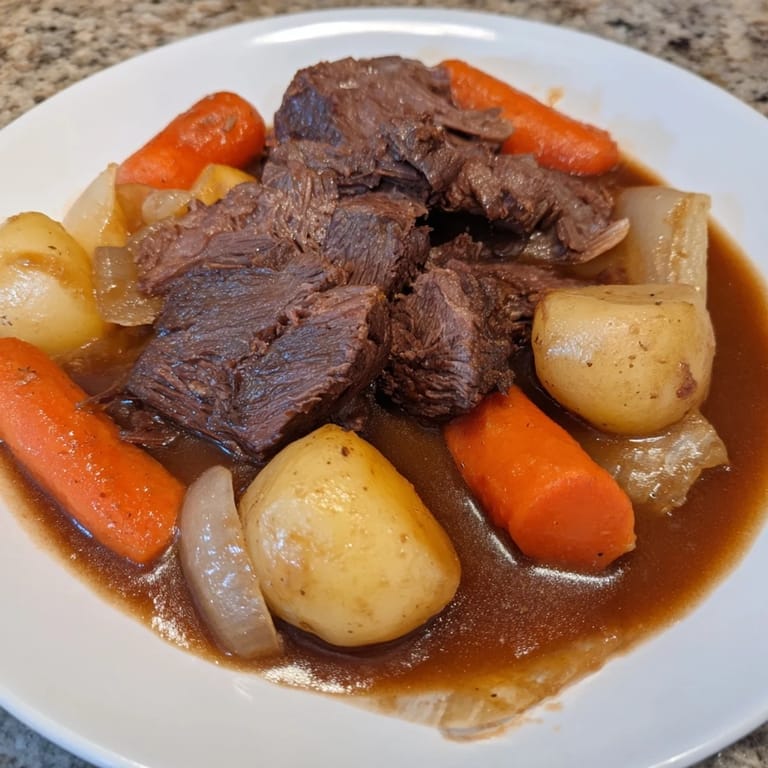
 Save
Save There's something about the smell of a pot roast slowly braising in the oven that fills a house with pure comfort. My grandmother used to make this on Sunday afternoons, and the aroma would drift through the kitchen while we played cards at the table, making it nearly impossible to focus on anything but the promise of dinner. I didn't start making it myself until years later, during a particularly cold winter when I wanted to recreate that exact feeling of home. The first time I tried it, I was nervous about getting the sear right, but once that beef hit the hot oil and the kitchen filled with that caramelized, savory sound, I knew I was on the right track. Now it's my go-to recipe when I need something that feels like a warm hug on a plate.
I made this for my partner during our first winter together, and I'll never forget how they came into the kitchen halfway through cooking, stopped mid-conversation, and just stood there breathing in the aroma with their eyes closed. When we finally sat down to eat, they had thirds, and that's when I realized this wasn't just a recipe—it was something I could count on to make people feel cared for. It's become our default meal when friends come over in cold weather, and watching people relax around a table with this kind of comfort food never gets old.
Ingredients
- Chuck roast (3–4 lbs): The marbling throughout this cut is essential—it breaks down into gelatin during the long braise and creates that silky, luxurious texture you can't get from leaner cuts.
- Kosher salt and black pepper: Don't skip the seasoning step on the raw meat; it's the foundation for everything else.
- Olive oil: Just enough to get that proper sear, which locks in the beef's deep, savory flavors.
- Yukon Gold or Russet potatoes: Yukon Golds hold their shape better and have a buttery quality, but Russets work if that's what you have on hand.
- Carrots and onions: These aren't just supporting players—they sweeten as they cook and mellow the acidity of the tomato paste and wine.
- Garlic: Smashed rather than minced, so it softens completely into the braising liquid.
- Beef broth and red wine: The wine adds depth and tannin structure; skip it only if you really prefer a gentler, broth-only gravy.
- Tomato paste, Worcestershire sauce, thyme, and bay leaves: This combination is the secret to a gravy that tastes like it simmered for days, not just hours.
- Flour or cornstarch: Whisked with cold water to thicken the braising liquid into a silky gravy at the very end.
Tired of Takeout? 🥡
Get 10 meals you can make faster than delivery arrives. Seriously.
One email. No spam. Unsubscribe anytime.
Instructions
- Set your oven and prep the meat:
- Preheat to 300°F and pat the roast completely dry with paper towels—this makes the sear so much better and deeper. Season all sides generously with salt and pepper, taking a moment to really rub it in.
- Build the crust:
- Heat your olive oil in the Dutch oven until it's almost smoking, then place the roast in with a satisfying sizzle. Let it sit undisturbed for 4–5 minutes per side until you see a dark mahogany crust form, then set it aside.
- Create the flavor base:
- In the same pot, add the onions and garlic, letting them soften and caramelize a bit in the beef's rendered fat. Stir in the tomato paste and cook for just a minute so it darkens slightly, then pour in the red wine and use a wooden spoon to scrape up all those caramelized brown bits clinging to the bottom.
- Bring everything together:
- Return the roast to the pot and add the beef broth, Worcestershire sauce, thyme, and bay leaves. The liquid should come about halfway up the sides of the meat—this is perfect for braising.
- Arrange and braise:
- Nestle the potatoes and carrots around the beef, then cover the pot and transfer it to the oven. This is where patience becomes your best friend; let it braise for 3 to 3½ hours until the beef is so tender it falls apart at a fork's touch and the vegetables are creamy inside.
- Finish the gravy:
- Remove the roast and vegetables to a serving platter, then skim any excess fat from the braising liquid. In a small bowl, whisk the flour and cold water until completely smooth, then stir it into the pot and simmer on the stovetop, whisking often, until the gravy thickens into something silky and rich.
- Plate and serve:
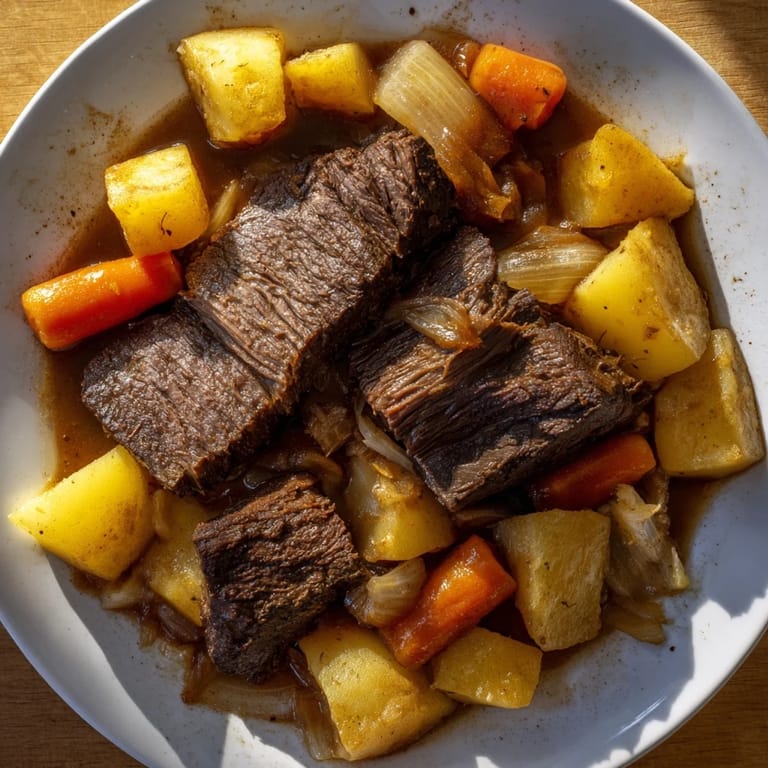
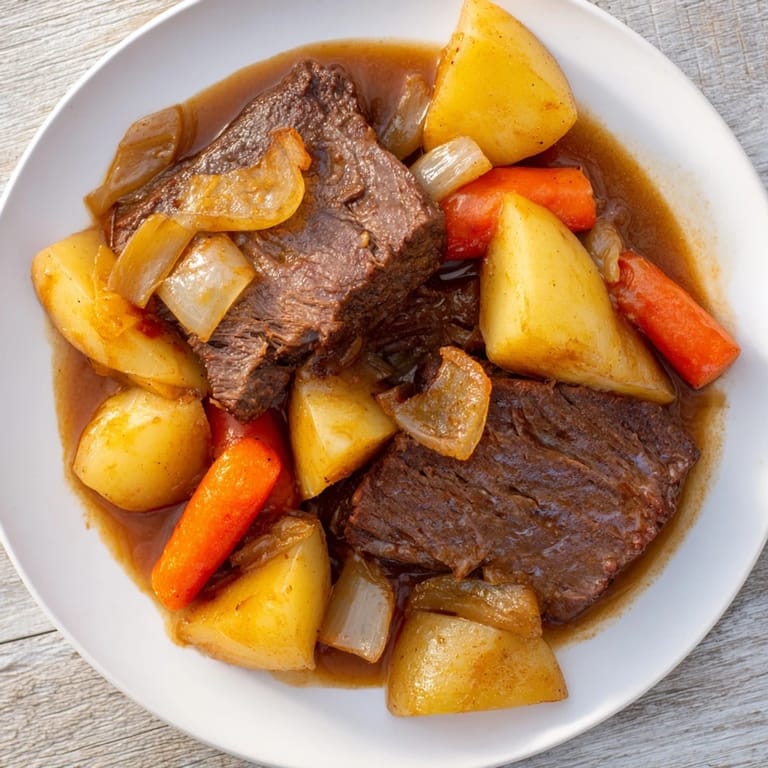
- Slice the beef, arrange it with the vegetables, and spoon that glorious gravy over everything.
 Save
Save There was a moment, maybe three hours into cooking, when I cracked open the oven to check on things and the steam hit my face, carrying with it this deep, complex aroma that somehow smelled like comfort itself. That's when I understood why this dish has been cooked in homes for generations—it's not just food, it's a ritual that transforms simple ingredients into something that feels like unconditional love on a plate.
The Art of the Sear
Getting a proper sear is the difference between a good pot roast and a great one, and it's easier than you might think. The key is patience—let that oil get hot enough that it shimmers, and don't move the beef around. Let it sit on one side for a full 4–5 minutes until it develops that dark, caramelized crust, then flip and repeat. I once rushed this step and ended up with pale, steamed beef instead of that gorgeous mahogany color, and the flavor difference was noticeable. Now I treat it like a meditation moment, standing there listening to that sizzle and knowing that something delicious is being built from the ground up.
Why Red Wine Matters
The red wine isn't just there for flavor; it's there for structure. As the pot roast braises, the wine's tannins break down and meld with the beef's natural gelatin, creating a gravy with real depth and complexity. The alcohol cooks off, leaving behind only the richness. I've made this with extra beef broth on nights when I didn't have wine, and while it's still delicious, it lacks that subtle sophistication. That said, if wine isn't your thing or you don't have it on hand, the recipe works perfectly fine—just use all beef broth instead, and you'll still have something wonderful.
Serving and Storage
Serve this with crusty bread to soak up every last drop of gravy, or alongside creamy mashed potatoes if you want to lean into the comfort factor completely. The leftovers are honestly one of the best parts—the flavors deepen even more as everything sits together overnight. I like to gently reheat it in the oven at 300°F with a splash of broth to loosen it up, but honestly, cold slices between two pieces of bread with a smear of horseradish is how most of my leftovers disappear.
- Store leftovers in an airtight container in the refrigerator for up to 4 days, or freeze for up to 3 months.
- If freezing, keep the beef and vegetables separate from the gravy for the best texture when reheating.
- Leftover gravy is magical spooned over toast or used as a base for beef sandwiches.
 Save
Save This pot roast is the kind of recipe that teaches you something every time you make it—about patience, about how simple ingredients transform through time and heat, and about why feeding people well is one of the most powerful things you can do. Once you master it, you'll find yourself making it again and again.
Recipe Questions & Answers
- → How do I ensure the beef stays tender during cooking?
Slow braising at low temperature for 3 to 3½ hours allows the connective tissues to break down, resulting in tender, juicy beef.
- → Can I skip the red wine in the cooking liquid?
Yes, you can replace it with additional beef broth; the dish will still have rich and savory flavors.
- → What vegetables work best with this dish?
Potatoes, carrots, and onions are traditional, but parsnips or celery can be added for extra depth and sweetness.
- → How do I make a gluten-free gravy?
Substitute all-purpose flour with cornstarch when thickening the gravy to keep it gluten-free.
- → What is the best way to serve this meal?
Serve sliced beef and vegetables with the thickened gravy, accompanied by crusty bread to soak up extra sauce.