 Save
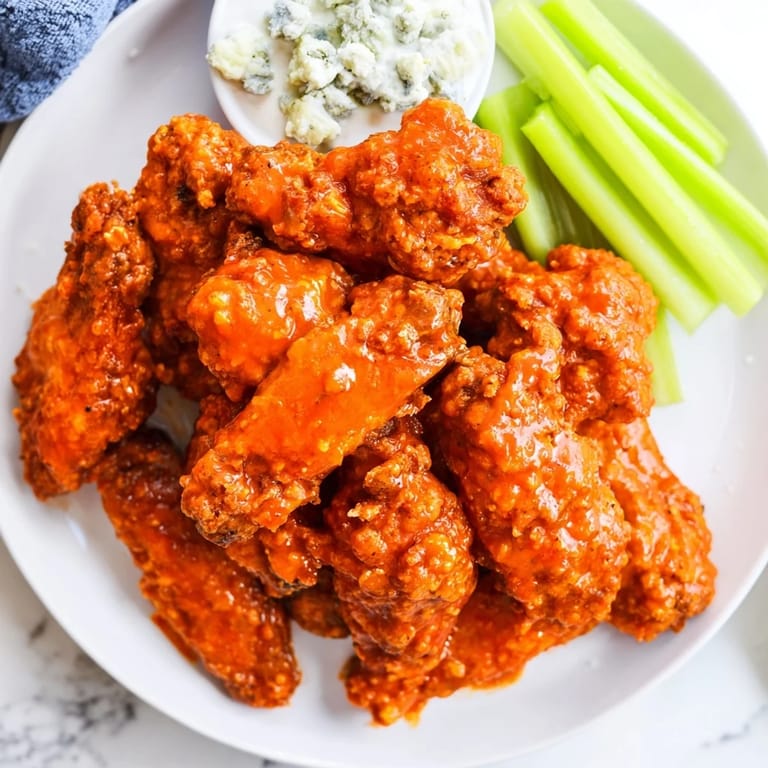
Save Buffalo wings arrived in my kitchen on a lazy Sunday when a friend mentioned they'd been craving the kind you get at sports bars—the ones with that glossy, tangy-hot sauce clinging to every crispy surface. I'd never deep-fried anything before, and the whole thing seemed unnecessarily fussy until that first batch came out of the oil golden and crackling. One bite and I understood the fuss completely. Now, whenever I make them, the smell alone brings people running from other rooms.
I made these for a roommate's birthday party years ago, nervous about whether deep-frying in my tiny apartment kitchen was actually safe. The oil bubbled and popped, steam rose dramatically, and I stood there with tongs looking like I'd accidentally become a professional chef. Everyone showed up hungry and left with sauce under their fingernails and empty platters, which I took as a sign I'd done something right.
Ingredients
- Chicken wings (1 kg), separated into drumettes and flats: Pat them completely dry before seasoning—this is the secret to crispiness, something I learned after a batch that turned out disappointingly soggy.
- Salt (1 tsp), black pepper (½ tsp), garlic powder (½ tsp): This base seasoning lets the chicken flavor shine through without overpowering the sauce.
- All-purpose flour (120 g) and paprika (1 tsp): The paprika adds color and a subtle earthiness to the coating.
- Vegetable oil (1 L): Use neutral oil with a high smoke point; I learned this the hard way when I tried to fry in olive oil once.
- Unsalted butter (60 g): This carries the sauce and softens the sharpness of the hot sauce.
- Hot sauce (120 ml), white vinegar (1 tbsp), Worcestershire sauce (½ tsp), cayenne pepper (½ tsp optional): Together these create that tangy-hot balance that makes buffalo wings instantly recognizable.
- Celery sticks and blue cheese dip: The cool, creamy counterpoint that makes eating spicy wings actually enjoyable.
Tired of Takeout? 🥡
Get 10 meals you can make faster than delivery arrives. Seriously.
One email. No spam. Unsubscribe anytime.
Instructions
- Prepare the wings:
- Pat the chicken wings completely dry with paper towels, then toss them with salt, black pepper, and garlic powder. Wet wings won't fry crispy, so don't skip the drying step.
- Coat with flour:
- Mix flour and paprika in a large bowl, then dredge each wing, shaking off excess coating. The paprika will give your wings a golden color and mild depth.
- Heat the oil:
- Bring your oil to 175°C (350°F) in a deep fryer or heavy-bottomed pot. Use a thermometer—this temperature is the difference between golden-crispy and pale-soggy.
- Fry in batches:
- Working in batches so the temperature stays steady, fry wings for 8–10 minutes until they're deep golden and cooked through. Crowding the pan drops the oil temperature and creates steam instead of crispiness.
- Make the sauce:
- While wings fry, melt butter over low heat and stir in hot sauce, vinegar, Worcestershire, and cayenne. The sauce should smell tangy and rich, not burnt.
- Toss and coat:
- Transfer fried wings to a large bowl, pour sauce over them, and toss everything until every wing is glossy and coated. Work quickly so they stay crispy.
- Serve immediately:
- Arrange wings on a platter with celery sticks and blue cheese dip on the side. Hot wings are the best wings.
 Save
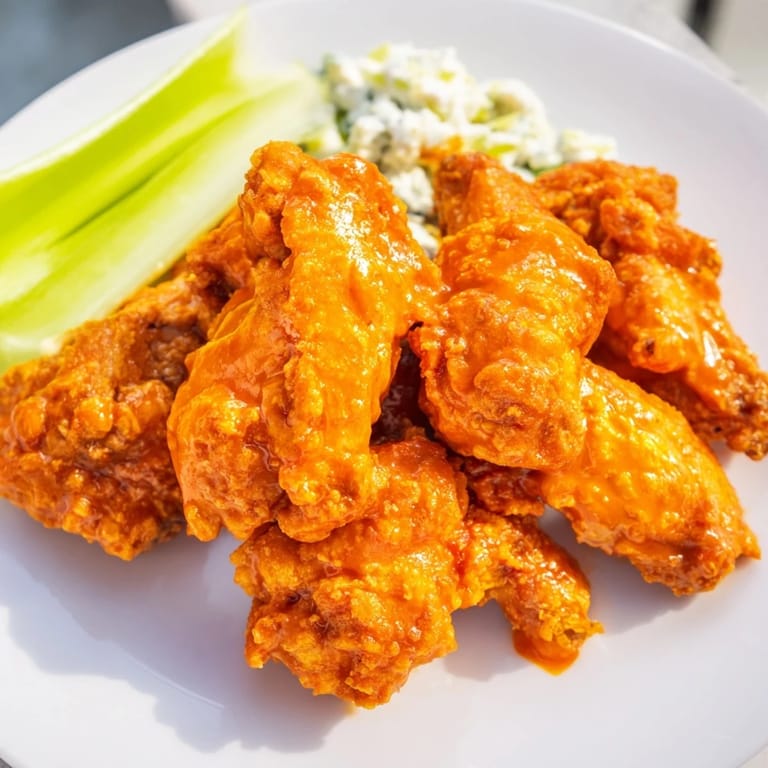
Save There's a moment, maybe ten minutes after you set a platter of buffalo wings on the table, when the sauce stops being a condiment and becomes the entire reason people keep coming back. Someone will inevitably get sauce on their shirt and laugh about it, and suddenly you're not just feeding people—you're creating a small, delicious memory.
The Double-Fry Difference
The first time I attempted double-frying, I thought I was overcomplicating things. But there's actual physics happening: the initial fry cooks the chicken through while the outside starts crisping, and the rest lets the exterior firm up. The second fry deepens the color and shatters that coating when you bite into it. It sounds elaborate, but it's really just a five-minute breather in the middle of cooking.
Finding Your Heat Level
Buffalo sauce heat is personal, and the cayenne pepper is your dial. Half a teaspoon gives you a warm spice that doesn't erase flavor, while a full teaspoon transforms it into something that makes you reach for blue cheese dip immediately. I usually start conservative and taste-test a wing before committing the entire batch—it's much easier to add heat than to rescue overly spicy wings.
The Sauce and Serving Strategy
The magic of buffalo wings lives in the balance between heat and cool richness, which is why blue cheese dip matters more than people realize. The creaminess softens the sharp vinegar and hot sauce, and the slight funk of the cheese adds complexity. Some people love ranch dressing instead, and that's completely fine—whatever dip you choose should be cold and creamy to create that contrast.
- Make sure your dip is actually cold before serving, not room-temperature disappointed.
- Set out extra celery because people use it more than you'd expect, both as a palate cleanser and as a vehicle for dip.
- If you're cooking for a crowd, keep a second batch of sauce warm on the stove so wings can be tossed fresh if needed.
 Save
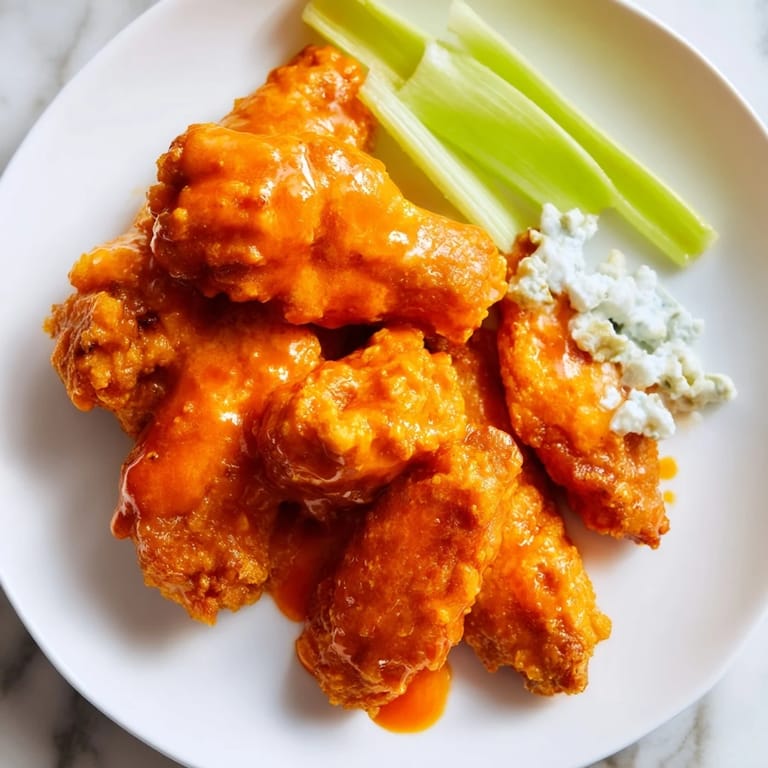
Save Buffalo wings have a way of turning ordinary moments into something worth remembering. Make them hot, serve them with good people, and let the sauce do the talking.
Recipe Questions & Answers
- → How do you make the wings extra crispy?
Double-frying the wings—first frying for 7 minutes, resting for 5, then frying another 3–4 minutes—ensures a crispy exterior with juicy meat inside.
- → What oil is best for frying these wings?
Vegetable oil or any neutral oil with a high smoke point, heated to 175°C (350°F), is ideal for frying the wings evenly and safely.
- → Can the spiciness of the Buffalo sauce be adjusted?
Yes, by varying or omitting the cayenne pepper in the sauce, you can tailor the heat level to suit your preference.
- → What are typical accompaniments served with these wings?
These wings are traditionally served with crisp celery sticks and a creamy blue cheese dip, which balance the spicy heat.
- → Is it necessary to dredge the wings in flour before frying?
Coating the wings in seasoned flour adds a flavorful crust and helps achieve a crispy texture upon frying.
- → How should the wings be seasoned before frying?
Wings are seasoned simply with salt, black pepper, and garlic powder to enhance the meat's natural flavor without overpowering the Buffalo sauce.