 Save
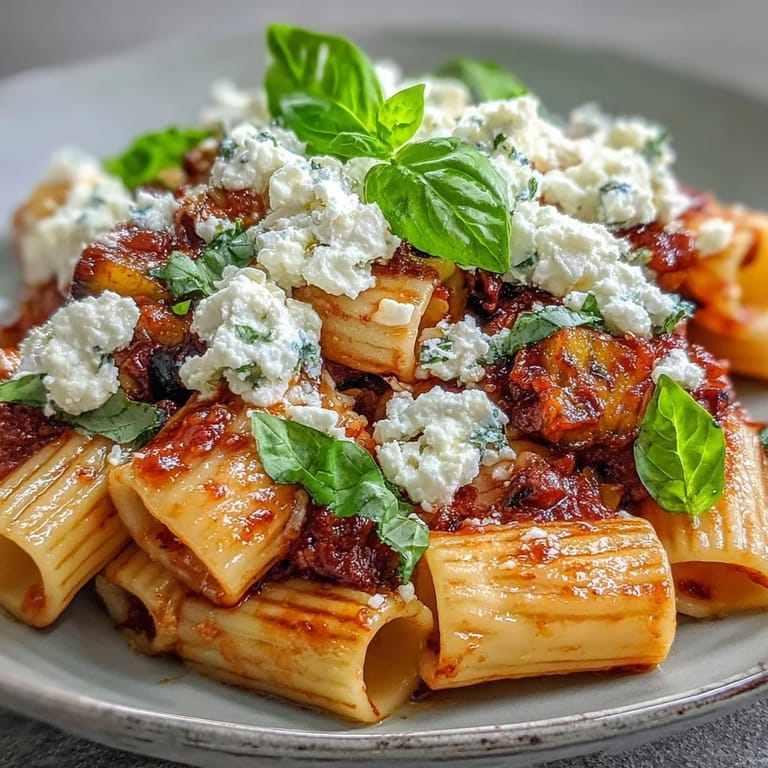
Save There's a particular afternoon I keep returning to—standing in a small Palermo market with my cousin, watching her pick eggplants like she was selecting precious stones, each one held up to the light. She explained that pasta alla norma wasn't just food, it was Sicilian defiance, a dish born when tomatoes and eggplants were all people had, and somehow that scarcity became abundance. Years later, making it in my own kitchen, I finally understood what she meant when the first forkful hit my tongue—the sweetness of roasted eggplant, the brightness of tomato, and that salty, almost tangy ricotta salata pulling everything into perfect balance.
I made this for my partner on a random Tuesday, no occasion, just because I'd been thinking about my cousin's voice describing it. He asked for seconds before finishing his first bowl, and then a third time later that night, cold straight from the container at the kitchen counter. That's when I knew this wasn't just a recipe I'd learned—it was something I'd actually internalized, something true.
Ingredients
- Eggplant (1 large, about 400 g): Cut into 2 cm cubes so they roast evenly and develop that golden, almost caramelized exterior that makes this dish sing.
- Rigatoni or penne pasta (400 g): The ridges catch the sauce beautifully, but honestly any sturdy pasta works—avoid thin strands that disappear into the tomato.
- Canned whole peeled tomatoes (800 g): Don't skimp here; good tomatoes make this sauce what it is, and the hand-crushed ones have better texture than passata.
- Extra-virgin olive oil (3 tbsp plus 2 tbsp): This carries the flavor of everything else, so taste it first—if it tastes good on its own, it'll taste good in the dish.
- Garlic cloves (2), finely chopped: Mince them small so they dissolve into the sauce rather than sitting there like little chunks.
- Onion (1 medium), finely chopped: The base that gives the sauce sweetness and depth without any sharp edges.
- Fresh basil (1 small bunch): Pick the leaves by hand and save some for finishing—basil bruised by a knife tastes different, and not in a good way.
- Ricotta salata (80 g), grated or crumbled: The salty, slightly tangy finishing touch that transforms this from good to revelatory, though Pecorino Romano works in a pinch.
- Dried chili flakes (1/2 tsp, optional): Just a whisper if you like heat, but don't feel obligated—this dish is beautiful without it.
- Salt and freshly ground black pepper: Taste as you go; the tomatoes and eggplant need enough salt to taste like themselves.
Tired of Takeout? 🥡
Get 10 meals you can make faster than delivery arrives. Seriously.
One email. No spam. Unsubscribe anytime.
Instructions
- Heat your oven and prep the eggplant:
- Turn the oven to 220°C and while it preheats, toss your eggplant cubes with 2 tablespoons of olive oil and a generous pinch of salt. Spread them on a baking tray in a single layer—crowding them steams them instead of roasting them, and that's the difference between silky and mushy.
- Roast until golden:
- Let them go for 25 to 30 minutes, turning halfway through, until the edges are deepened and caramelized. You'll smell when they're getting close—it's that sweet, almost nutty aroma.
- Start the sauce base:
- While the eggplant roasts, warm 1 tablespoon of olive oil in a large skillet over medium heat. Add your chopped onion and let it soften for about 5 minutes, stirring occasionally—you want it translucent and sweet, not colored.
- Build the flavor layers:
- Add the minced garlic and chili flakes (if using) and cook for just 1 minute, just until fragrant. Don't let the garlic color or it turns bitter and the whole sauce feels sharp instead of rounded.
- Add the tomatoes and let them simmer:
- Crush the tomatoes by hand or with a spoon—I like the rustic quality of hand-crushed, plus you control the texture better. Pour them in with their juices, season with salt and pepper, and let the sauce simmer uncovered for 15 to 20 minutes, stirring now and then, until it thickens and the raw tomato taste mellows into something deeper.
- Cook the pasta to al dente:
- Bring a large pot of salted water to a rolling boil and cook your pasta according to the package directions, but taste it a minute before the recommended time—al dente should still have a slight resistance when you bite, not soft. Reserve 1/2 cup of the starchy pasta water before you drain.
- Bring everything together:
- Add the golden roasted eggplant and most of the basil to the tomato sauce, stir gently, and let it warm together for 2 more minutes so the flavors settle. Then toss the drained pasta into the sauce, adding a splash of that reserved pasta water to loosen it into something silky and cohesive.
- Finish and serve:
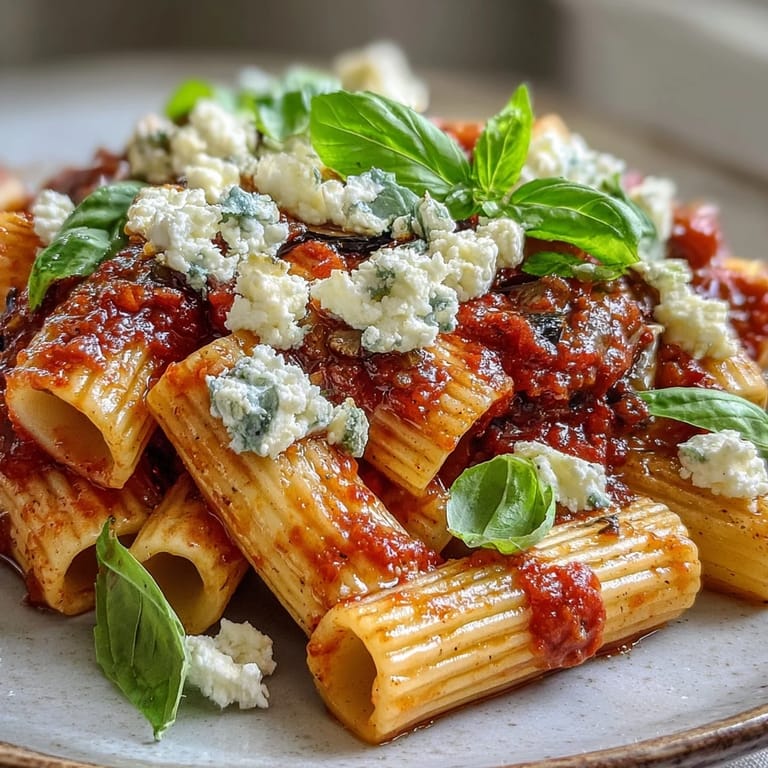
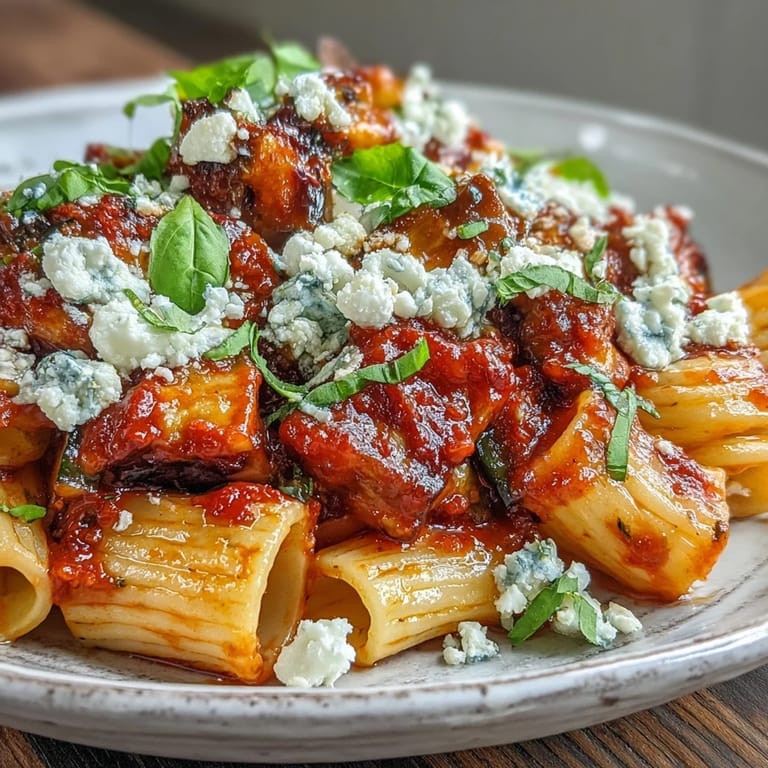
- Spoon the pasta into bowls, top with a generous handful of ricotta salata and a few fresh basil leaves, and serve while it's still warm and the basil is still bright.
 Save
Save What struck me most about this dish is how it's never quite the same twice, even when you follow it exactly. One time the eggplant was silkier, another time the sauce felt brighter, and I realized that's not a failure—it's how cooking actually works, how ingredients speak to their moment, their season, their source. That's when a recipe stops being instructions and becomes a conversation.
The Story Behind This Sicilian Classic
Pasta alla norma comes from Catania, a city on the eastern coast of Sicily with a history as layered and complicated as the dish itself. The name honors the composer Bellini, whose opera Norma premiered there in the 1830s, and somehow this humble pasta—born from what people had rather than what they sought—became associated with art and culture and human striving. There's something beautiful about that, about food becoming a mirror for how people see themselves.
Making It Your Own
This is one of those recipes that welcomes small adaptations without losing its soul. Some cooks add a pinch of sugar if their tomatoes taste too sharp, others use half the basil amount if they find it overwhelming, and I've seen it made with fresh tomatoes in August when they're at their peak. The structure is flexible; the heart isn't.
Pairing and Serving Thoughts
Serve this with something cold and slightly sharp—a Sicilian white wine like Grillo, or a very light red like Frappato, cuts through the richness beautifully. A simple green salad on the side, nothing fancy, just dressed greens to refresh your palate between bites.
- If you're cooking for someone who's never tried ricotta salata, explain it as the salty cousin of mozzarella—it might help them understand why it matters so much here.
- This dish is actually better the next day, cold or reheated gently, because the flavors have had time to know each other.
- Make extra sauce; you'll want it, whether that's for dipping bread or tossing with leftover pasta two days later.
 Save
Save This is the kind of recipe that teaches you something about cooking every time you make it, if you're paying attention. It's patient, forgiving, and at the end of it, you have something that tastes like a place you might never visit but somehow feel you know.
Recipe Questions & Answers
- → What type of pasta works best for this dish?
Rigatoni or penne are ideal choices as their ridges and tube shapes capture the sauce beautifully. The pasta needs enough structure to hold up against the chunky eggplant pieces while allowing the rich tomato sauce to coat each piece thoroughly.
- → Can I prepare the eggplant ahead of time?
Absolutely. Roast the eggplant up to a day in advance and store it in the refrigerator. When ready to serve, simply reheat it gently in the tomato sauce before tossing with the freshly cooked pasta.
- → What makes ricotta salata different from regular ricotta?
Ricotta salata is a firm, aged cheese made from salted and pressed ricotta. It has a crumbly texture similar to feta and delivers a salty, milky flavor that traditional fresh ricotta cannot provide, making it essential for this authentic preparation.
- → How do I prevent the eggplant from becoming bitter?
Using fresh, firm eggplant and roasting at high heat caramelizes the natural sugars. Salting the cubes before roasting helps draw out moisture and bitterness, resulting in golden, tender pieces with a naturally sweet flavor.
- → Can I make this entirely dairy-free?
Yes. Simply omit the ricotta salata or replace it with a plant-based alternative. The dish remains delicious thanks to the robust combination of roasted eggplant and savory tomato sauce, though the salty finish will be more subtle.
- → What wine pairs well with this Sicilian classic?
A crisp Grillo or Catarratto white wine from Sicily complements the dish beautifully. For red wine lovers, a light Frappato or Nero d'Avola provides just enough body without overwhelming the delicate eggplant and tomato flavors.