 Save
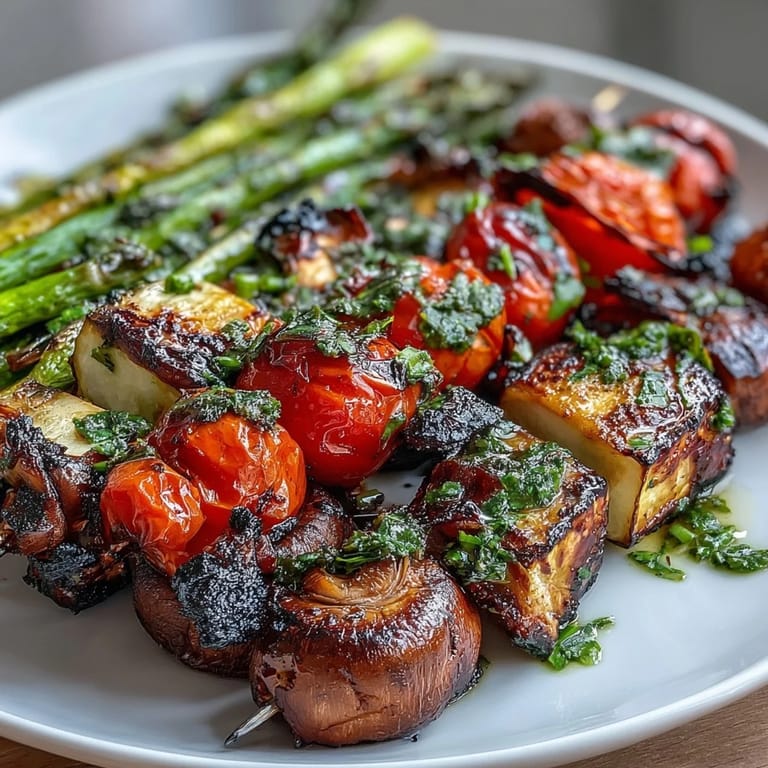
Save There's something almost magical about standing at the grill on a warm evening, watching vegetables transform from raw to caramelized as the smoke curls up around you. My neighbor Marcus introduced me to chimichurri sauce years ago, and I was instantly hooked by how this vibrant green mixture could elevate even the simplest grilled vegetables into something people actually looked forward to eating. That first time, I nearly burned the zucchini because I was too busy talking to notice the timing, but the chimichurri saved the day. Now these skewers have become my go-to for summer dinners when I want something colorful, fuss-free, and genuinely delicious.
I made these for a potluck last summer where I didn't know anyone particularly well, and somehow watching people's faces light up when they bit into one of these skewers broke the ice better than any small talk could. One woman asked if she could have the chimichurri recipe, and we ended up talking about gardens and farmers markets for the rest of the evening. Food has a way of doing that—turning strangers into friends over something as simple as grilled vegetables.
Ingredients
- Red and yellow bell peppers: Cut into sturdy 1.5-inch pieces so they don't slip through the grill grates and hold their shape beautifully as they soften inside and caramelize outside.
- Zucchini: Slice into ½-inch rounds rather than batons—they're less likely to dry out on the grill and create those perfect tender layers.
- Red onion: Cut into wedges that keep their structure; the natural sugars deepen and mellow wonderfully with heat.
- Button mushrooms: Leave smaller ones whole and halve the larger ones so they cook evenly without becoming mushy.
- Eggplant: Cut into 1-inch cubes and don't skip salting them first if you have time—it draws out excess moisture so they grill faster and taste less bitter.
- Cherry tomatoes: These are optional on skewers since they can burst, but thread a few on if you're careful with placement.
- Olive oil: Use enough to coat everything well; it's what creates that golden, slightly charred exterior.
- Kosher salt and black pepper: Season generously—the grill will cook off some of that punch, so don't be shy.
- Fresh parsley and cilantro: The backbone of chimichurri; fresh is non-negotiable, and finely chopping by hand rather than blending keeps the texture light and alive.
- Garlic: Mince it fine so it distributes evenly through the sauce without any sharp, raw-garlic shock.
- Red wine vinegar: The acid that cuts through richness and keeps chimichurri tasting fresh rather than heavy.
- Extra-virgin olive oil: Drizzle this in last and don't over-whisk; you want the sauce to stay vibrant green, not turn into a murky emulsion.
- Dried oregano and red pepper flakes: A whisper of heat and earthiness that makes people wonder what that complex flavor is.
Tired of Takeout? 🥡
Get 10 meals you can make faster than delivery arrives. Seriously.
One email. No spam. Unsubscribe anytime.
Instructions
- Soak your skewers:
- If using wooden skewers, submerge them in water for at least 30 minutes so they don't catch fire on the grill—I learned this the messy way by forgetting once and watching my dinner send up actual flames.
- Heat the grill:
- Get it screaming hot to medium-high (around 400°F) so vegetables char quickly on the outside while staying crisp-tender inside.
- Coat the vegetables:
- Toss everything in a large bowl with olive oil, salt, and pepper, making sure each piece gets a light gloss that will help them brown.
- Thread with intention:
- Alternate different vegetables as you thread—it's not just prettier, it also helps them cook at similar rates and looks inviting enough to photograph.
- Grill with attention:
- Place skewers on the grill and turn them every 3 to 4 minutes for 12 to 15 minutes total, watching for light charring and tender flesh that gives slightly when pierced with a fork.
- Make the chimichurri:
- While vegetables cook, combine parsley, cilantro, minced garlic, red wine vinegar, oregano, red pepper flakes, salt, and pepper in a bowl, then whisk in olive oil gently until everything is bright and combined—don't over-whisk or the color will dull.
- Plate and drizzle:
- Slide the vegetables onto a platter, drench them with chimichurri, and set more sauce on the side for people who want extra.
 Save
Save There was a moment during that potluck when I watched a kid—who his mom had warned me didn't eat vegetables—bite into a skewer with chimichurri and just go quiet, thinking. Then he asked for another one, and his mom nearly fainted. That's when I realized these aren't just skewers; they're proof that good technique and fresh ingredients can transform how people actually experience food.
The Art of the Perfect Char
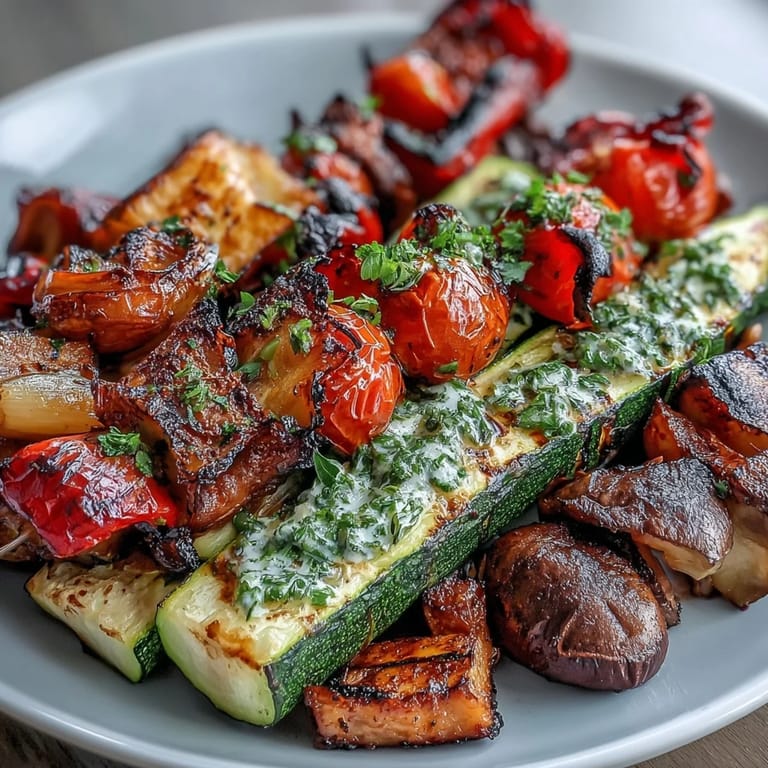
Charring isn't about blackening; it's about the moment when the vegetable's surface caramelizes and deepens in flavor while the inside stays tender. The secret is heat and patience—don't constantly fiddle with the skewers, but do turn them consistently so every side gets that kissed, slightly blistered look. I once spent so much time adjusting them that they never built up that crust, and the whole thing tasted one-dimensional. Now I set a timer for my turning, and everything comes out with that restaurant-quality appearance and the sweet, smoky depth that makes people ask for the recipe.
Chimichurri: The Game Changer
Chimichurri is forgiving in the best way—it's not a precise formula, more of a philosophy about fresh herbs, acid, and heat coming together. I've made it with basil when I ran out of parsley, added more red pepper flakes when I was in a spicy mood, and even turned it into a loose paste by hand when I didn't feel like pulling out the whisk. The consistency you're after is somewhere between a sauce and a chunky herb situation—pourable but with personality. It should taste so vibrant that it wakes up your mouth and makes vegetables taste like the main event, not a supporting role.
Variations and Occasions
These skewers adapt to whatever's in season or lying around—spring onions in early summer, late tomatoes in August, even Brussels sprouts shaved thin if you're grilling in cooler months. I've added halloumi cheese for a Mediterranean dinner party, tossed in some marinated tofu when cooking for vegan friends, and once threw on thick apple slices alongside the vegetables when I was experimenting. The formula stays the same, but the dish never gets boring because you're working with what your season offers.
- Add cubes of halloumi or marinated tofu if you want something heartier and more protein-forward.
- Serve alongside crusty bread for soaking up every last bit of chimichurri, or over rice to make it a complete meal.
- Leftover chimichurri keeps in the fridge for days and tastes incredible on grilled fish, roasted potatoes, or even scrambled eggs.
 Save
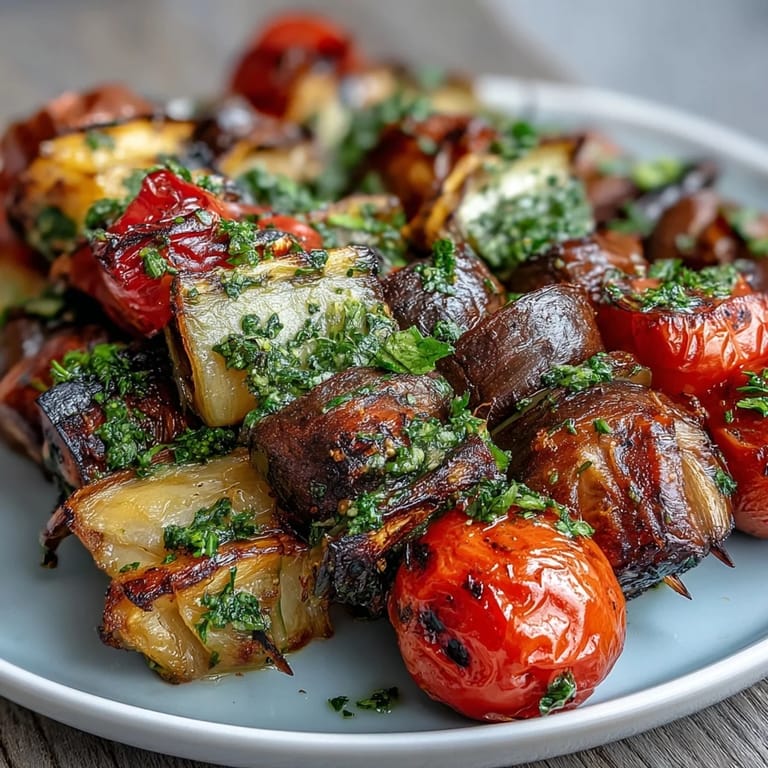
Save There's real joy in grilling something this colorful and watching people come back for more because it tastes genuinely good, not because it's healthy. Keep these in your rotation.
Recipe Questions & Answers
- → Which vegetables work best for the skewers?
Bell peppers, zucchini, red onion, mushrooms, eggplant, and cherry tomatoes create a balanced mix of textures and flavors when grilled.
- → How do I prevent the vegetables from sticking to the grill?
Coat vegetables lightly with olive oil and ensure the grill is preheated to medium-high heat before placing the skewers on it.
- → Can I prepare the chimichurri sauce ahead of time?
Yes, chimichurri can be made a few hours in advance to allow the flavors to meld, but keep it refrigerated until serving.
- → What adjustments can I make for added protein?
Add halloumi cheese cubes or marinated tofu to the skewers before grilling for a protein boost.
- → How do I keep wooden skewers from burning on the grill?
Soak wooden skewers in water for at least 30 minutes prior to grilling to prevent them from burning.