 Save
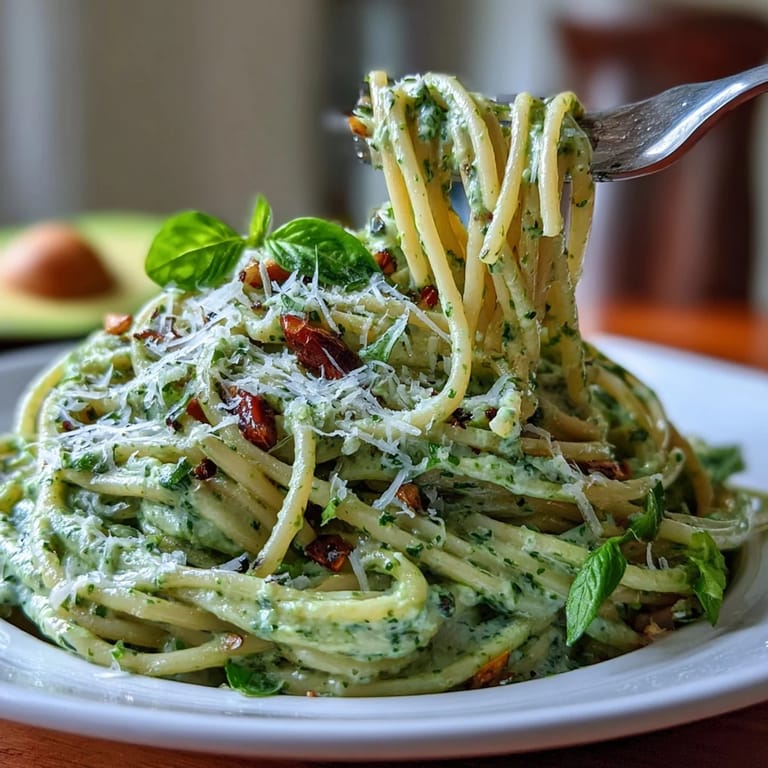
Save The sharp scent of fresh basil always reminds me of spring cleaning my tiny apartment kitchen, when a bowl of ripe avocados on the counter practically begged to become something bolder than just toast. On a day short on time and too warm to stand over the stove, I whirred up this creamy avocado pesto in the food processor, and suddenly dinner was done before I knew it. I’ve come to relish the way the sauce clings to the pasta—silky, bright, and surprisingly decadent. Every bite strikes the balance between refreshment and comfort that never gets old. That first bowl made me wonder why I didn’t make pasta this way all year round.
One night I made this for my sister, who’s always skeptical of “healthy” twists—she took a single bite, paused, then asked for seconds before I’d even added the extra Parmesan. We both ended up standing around the stove, twirling noodles straight from the pot and laughing about old kitchen disasters the ones where things went very wrong. The quickness of this recipe actually left us with more time to linger over dinner and less cleaning up. It’s become our kind of “cheat night” dinner that doesn't feel like a compromise. The best part: leftovers vanish faster than any other pasta we make together.
Ingredients
- Pasta: I like spaghetti or linguine because their smooth shape lets the creamy sauce slip into every bite; gluten-free options work beautifully here.
- Ripe avocados: Use them when they give slightly under gentle pressure for that buttery, smooth result—if they’re too firm, the sauce won’t blend as luxuriously.
- Fresh basil leaves: This is what brings the whole pesto alive; I pack the measuring cup loose and always add a little extra for extra green flavor.
- Pine nuts (or walnuts): Toasting them in a dry pan for a minute brings out their richness; walnuts add a deeper earthiness if you opt for a swap.
- Garlic: Just two cloves are enough for a subtle heat—a little goes a long way when raw.
- Freshly grated Parmesan cheese: Grate it yourself if you can, pre-shredded never quite melts in the same irresistible way.
- Lemon juice: Squeezing half a lemon brightens everything; sometimes I add a touch more if the avocados taste especially rich.
- Extra virgin olive oil: It smooths the sauce and adds a peppery note; quality really shines here.
- Salt and black pepper: I always taste and adjust at the end because avocados and Parmesan vary so much in saltiness.
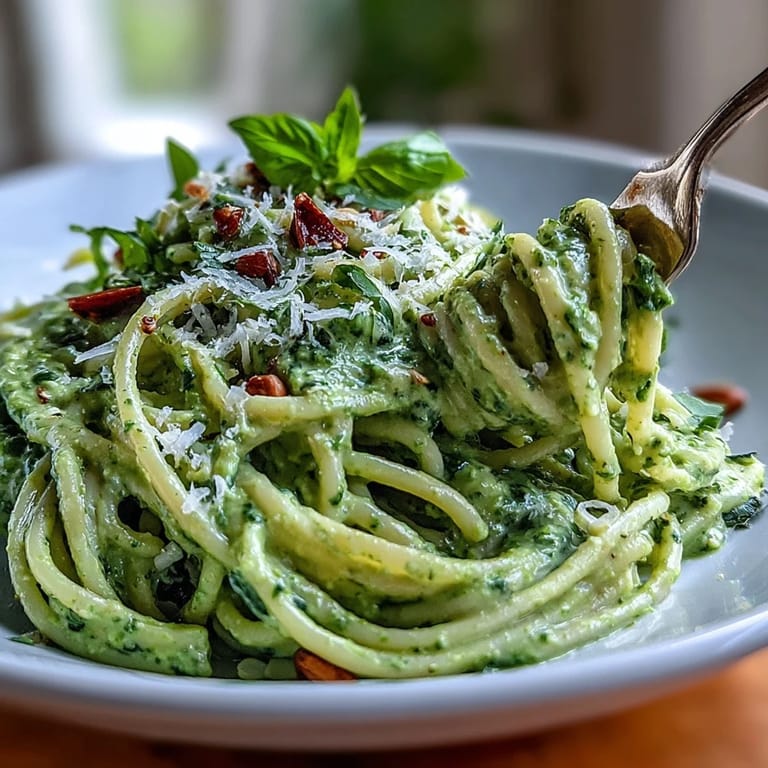
- To garnish: Extra Parmesan, fresh basil, and a dusting of lemon zest turn this pasta into the prettiest plate at the table.
Tired of Takeout? 🥡
Get 10 meals you can make faster than delivery arrives. Seriously.
One email. No spam. Unsubscribe anytime.
Instructions
- Boil your pasta:
- Fill a big pot with salted water and get your noodles cooking until just al dente; swirling the pasta as it simmers helps prevent sticking.
- Reserve the magic water:
- Before draining, scoop out some starchy pasta cooking water and set it aside for later—it’s the trick for making the sauce cling.
- Blend the pesto:
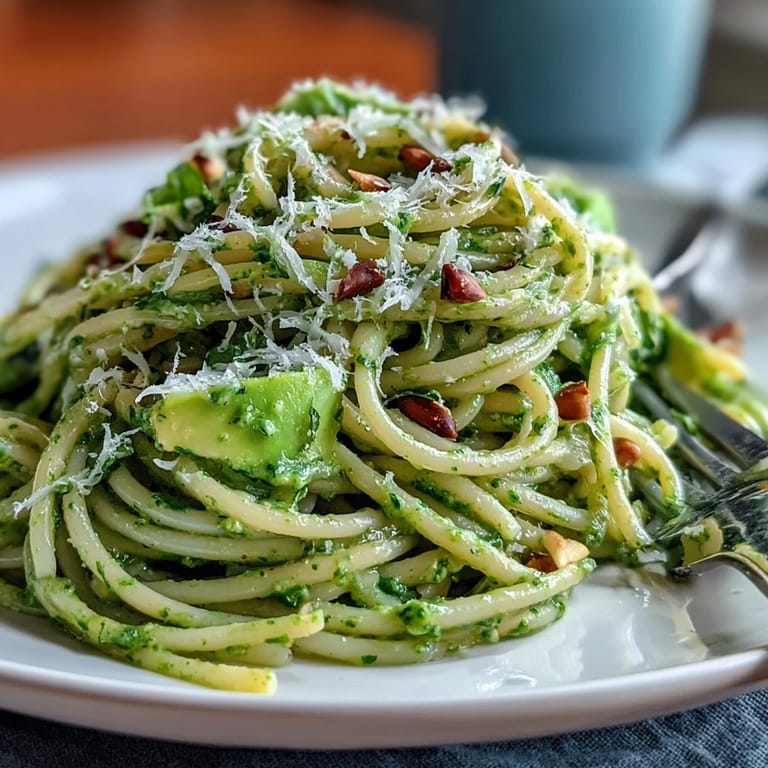
- Add avocado, basil, pine nuts, garlic, Parmesan, lemon juice, and olive oil to your food processor or blender; blend until the mixture is silky and has a pale green glow, stopping to scrape down the sides if needed.
- Season to taste:
- Scoop a spoonful and adjust salt, pepper, or lemon if you think it needs it; it should taste fresh and lively.
- Combine pasta and sauce:
- Return drained pasta to the pot, then pour in the creamy pesto; toss quickly, adding splashes of reserved pasta water until every strand is glossy and coated.
- Plate and finish:
- Serve immediately, twirling the pasta onto plates and topping with extra Parmesan, basil, and some grated lemon zest if you like.
 Save
Save 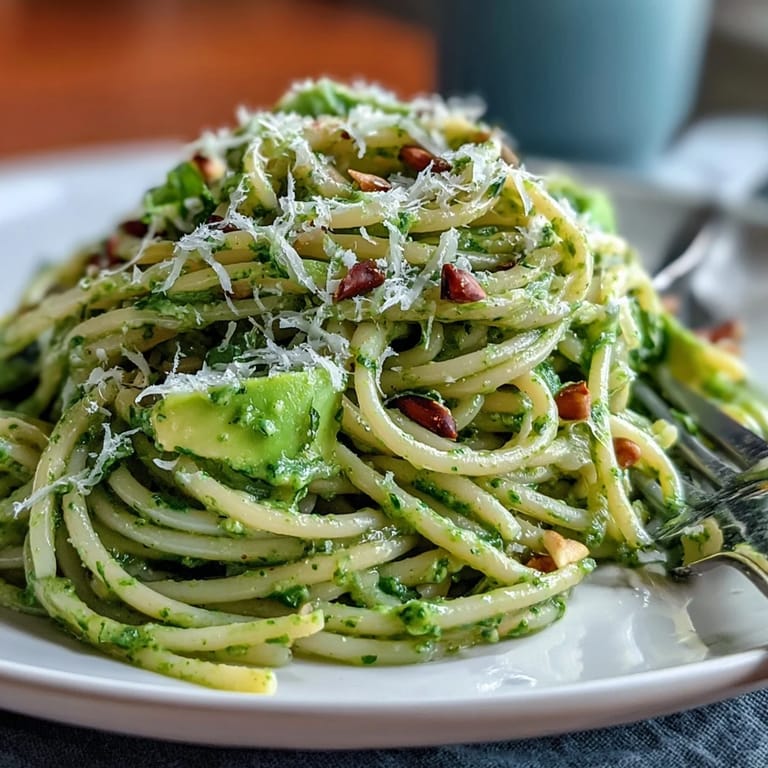 Save
Save The night I first brought this pasta to a casual backyard dinner, someone said it tasted like “spring on a plate”—and every forkful seemed to lighten the mood as if we were all suddenly eating outdoors, even inside. It was the kind of meal that sparked stories, not just silence.
Swaps and Shortcuts
Sometimes I run out of pine nuts and just grab whatever nuts I have (even almonds work!) and the pesto still turns out gloriously green and nutty. If you’re feeling fancy, toss in a handful of halved cherry tomatoes or a few roasted veggies, and dinner instantly feels more abundant. For vegan friends, I switch in nutritional yeast or a plant-based Parmesan—it’s still incredibly creamy and flavorful without the cheese.
Prep and Storage Hints
If you make the sauce ahead of time, pressing a piece of plastic wrap directly onto its surface helps keep its color vibrant until you’re ready to toss it with pasta. Leftovers can be a bit brown by the next day, but the flavor’s still bold, especially if you perk things up with a squeeze of lemon. I’ve found this is truly a “best fresh” kind of dish, so I only cook as much as will be devoured that night.
Making It Your Own
Once you have the basic formula down, this sauce welcomes tweaks—try a handful of arugula for a peppery bite or swirl in a touch of chili oil for some gentle heat. Even just a sprinkle of finely grated lemon zest right before serving lifts the whole dish. No matter what, don’t skimp on tasting as you go, and enjoy how effortless it all feels every time.
- If you’re worried about avocados browning, have serving bowls ready before tossing the pasta.
- Try reserving a bit of the pesto for sandwich spreads or as a dip for veggies.
- Even a small amount of extra lemon juice helps the color stay bright for a few extra minutes.
 Save
Save 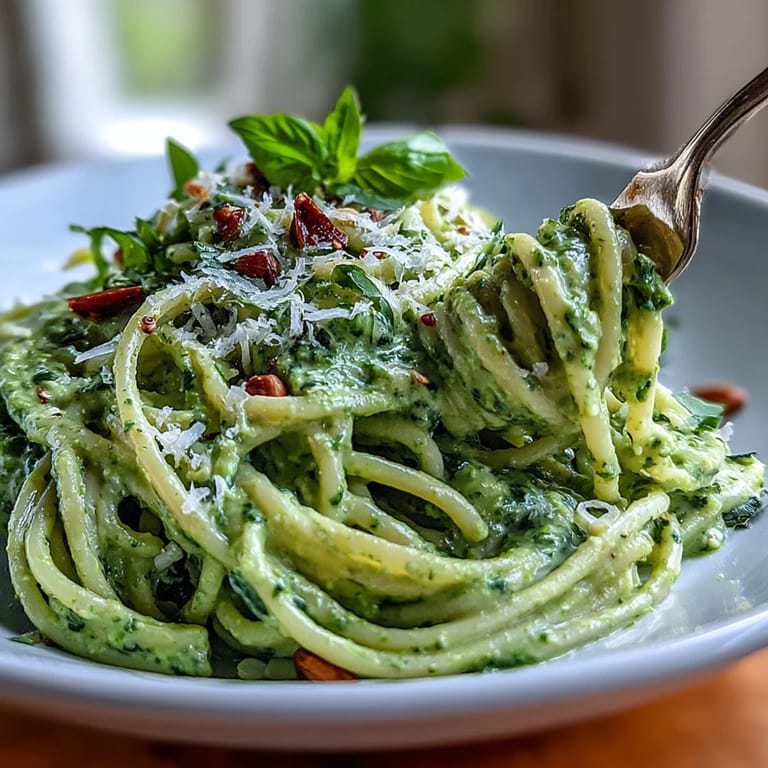 Save
Save This avocado pesto pasta always finds a way to add color and easy joy to my busiest nights. Here’s hoping it brings the same to your table, no matter who’s gathered around.
Recipe Questions & Answers
- → How do I stop the avocado from browning?
Bright acid helps: add the lemon juice to the blended avocado and serve right away. If you must hold it briefly, cover the surface with plastic wrap or keep chilled, but the dish is best served immediately.
- → How much pasta water should I add?
Start with a splash (2–3 tbsp) of reserved pasta water and toss; add more in small amounts until the sauce coats the strands smoothly. The starch in the water emulsifies the avocado for a silkier finish.
- → Can I use other nuts instead of pine nuts?
Yes. Toasted walnuts or almonds are great substitutes and add a pleasant, slightly different nuttiness. Toast briefly in a dry pan to boost flavor before blending.
- → How can I make this dairy-free?
Omit the Parmesan or replace it with a nutritional yeast or vegan hard-cheese alternative to retain umami while keeping the sauce creamy and dairy-free.
- → Will the sauce be too heavy on the pasta?
No—use reserved pasta water to thin it as needed and toss thoroughly so the sauce lightly coats each strand rather than clumping, creating a balanced, silky texture.
- → What additions pair well with this dish?
Bright additions like halved cherry tomatoes, lemon zest, fresh basil, or grilled vegetables pair nicely. For protein, grilled chicken or shrimp complement the richness without overpowering the pesto.