 Save
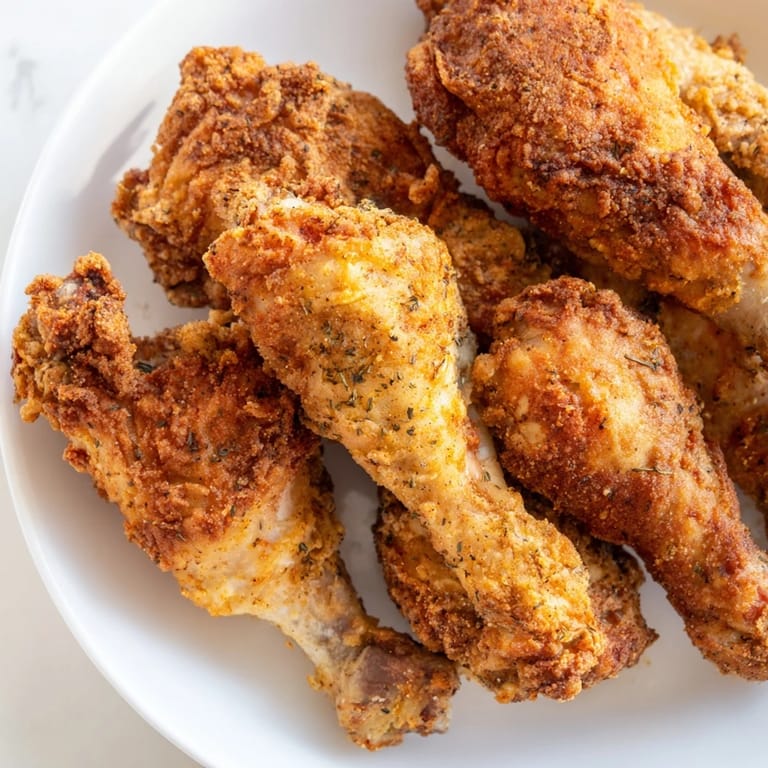
Save There's something about the smell of hot oil hitting a kitchen that instantly takes me back—not to restaurants or fancy dinner parties, but to Sunday afternoons at my aunt's house where she'd fry chicken in a cast iron skillet while the rest of us gathered around like it was the only event that mattered. That golden, crackling sound when each piece hit the oil, the way steam would rise and catch the afternoon light—I didn't know then that those moments were teaching me something essential about patience, temperature, and respect for simple food. Now when I make fried chicken, I'm chasing that same magic: perfectly seasoned, impossibly crispy outside, and so tender inside that it practically dissolves on your tongue.
I learned to make this properly not from a cookbook but from trial and error—and a lot of patience with burnt flour and unevenly cooked chicken pieces. The turning point came when I realized the buttermilk wasn't just tenderizing the meat; it was creating this protective barrier that kept the inside moist while the coating did its crunchy job outside. Once I started respecting the marinade time and the resting period between dredging and frying, everything clicked.
Ingredients
- Chicken (1.2 kg, about 8 pieces): Skin-on drumsticks and thighs are your best bet—they stay juicier than white meat and the skin crisps up beautifully, though feel free to use your favorite pieces.
- Buttermilk (240 ml): This is the secret ingredient that nobody talks about; it tenderizes the chicken while adding a subtle tang that deepens the flavor beyond just salty and seasoned.
- All-purpose flour (240 g): The foundation of your crust—don't skip this or use cake flour, as the gluten structure is what gives you that satisfying snap.
- Garlic powder, onion powder, smoked paprika, dried thyme: These create layers of flavor that make people ask why your fried chicken tastes better than they expected.
- Vegetable oil (1 liter): Use a neutral oil with a high smoke point; I prefer canola or peanut oil because they don't compete with the seasoning.
- Salt, black pepper, cayenne pepper: The salt seasons the chicken from inside out during the marinade, while cayenne adds a gentle warmth you don't taste directly but definitely feel.
Tired of Takeout? 🥡
Get 10 meals you can make faster than delivery arrives. Seriously.
One email. No spam. Unsubscribe anytime.
Instructions
- Build your flavor foundation:
- Combine buttermilk with salt, pepper, paprika, and cayenne in a large bowl, stirring until the salt dissolves completely. Add your chicken pieces and turn them carefully to coat every surface, then cover and let them sit in the fridge for at least 2 hours—overnight is even better, as the acid in the buttermilk slowly tenderizes the meat and the seasonings work their way in.
- Mix your coating blend:
- In a separate bowl, whisk together flour, garlic powder, onion powder, thyme, smoked paprika, salt, and pepper. This blend should smell absolutely incredible when you mix it—take a moment to appreciate that because it's a sign all your seasoning is going to be distributed evenly.
- Dredge with intention:
- Pull each chicken piece from the buttermilk one at a time, letting excess drip off naturally without squeezing, then lay it in the flour mixture and turn it over several times, pressing gently so the coating really adheres rather than just sitting on the surface. This is worth taking your time on because it's the difference between coating and crust.
- Let the coating set:
- Transfer your dredged pieces to a wire rack and walk away for 10 minutes—this gives the coating time to adhere properly, which means it won't fall off into your oil and it stays crunchier when it hits the heat.
- Get your oil to the right temperature:
- Heat your oil to exactly 175°C (350°F), checking with a thermometer if you have one; if you don't, drop a single flour-coated piece in and it should sizzle aggressively and turn golden in about 3-4 minutes. This temperature is crucial because too cool and you get greasy chicken, too hot and the outside burns before the inside cooks.
- Fry in batches without crowding:
- Place chicken pieces into the oil gently so they don't splash, working with only 3-4 pieces at a time so the oil temperature stays consistent and each piece gets the heat it needs. Turn them occasionally with tongs and listen for that constant, confident sizzle.
- Know when it's ready:
- Chicken is done when the coating is deep golden brown (about 12-15 minutes depending on piece size) and the internal temperature hits 75°C (165°F) when you check with a thermometer. If you don't have a thermometer, the thickest piece should show no pink when you cut into it.
- Drain and rest:
- Remove chicken to a wire rack or paper towels and let it sit for 5 minutes before serving—this last step keeps the outside crispy instead of steaming itself into softness on a warm plate.
 Save
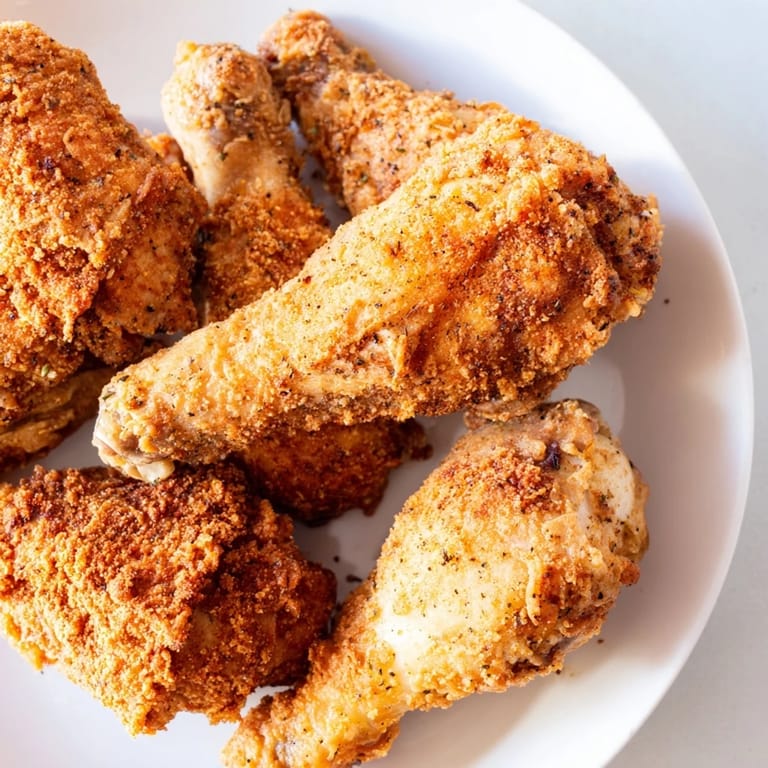
Save The moment I knew I'd nailed this recipe was when someone took a bite and closed their eyes instead of immediately reaching for the next piece—that pause is everything. They weren't just eating chicken; they were experiencing the care that went into the timing, the seasoning, the temperature, the patience.
The Science Behind the Crunch
Fried chicken is one of the few dishes where understanding what's actually happening makes you better at it. The buttermilk marinade isn't magic—it's chemistry: the lactic acid breaks down muscle proteins while the fats coat the chicken, keeping moisture locked inside. When that floured exterior hits hot oil, the water inside the chicken turns to steam, which pushes the coating away slightly and creates tiny air pockets that become those golden, crispy layers. The resting period before frying lets the flour mixture fully hydrate and stick, which is why it doesn't float off into your oil and turn into burnt specks.
Seasoning Strategy That Actually Works
Most people under-season fried chicken because they're nervous about adding salt, but you need it both in the marinade and in the coating. The salt in the buttermilk penetrates the meat and seasons it from within, while the salt in the flour coating stays on the surface where your taste buds encounter it first—that double-layer approach is what makes professional fried chicken taste so memorable. The smoked paprika is there not just for color but for depth; it adds an almost imperceptible smokiness that makes people wonder why your version tastes more interesting than the standard kind.
Serving and Storing
Fried chicken is best served immediately while the exterior is still crackling, but if you need to hold it, a warm oven at 65°C (150°F) will keep it hot without drying it out.
- Serve alongside creamy coleslaw or sharp vinegar-based slaw to cut through the richness and add brightness to each bite.
- Mashed potatoes or buttered cornbread are non-negotiable sides that turn this into a complete meal rather than just dinner.
- Leftovers actually improve after a day in the fridge because the flavors settle deeper into the meat, though you'll need to reheat gently to restore some crunch.
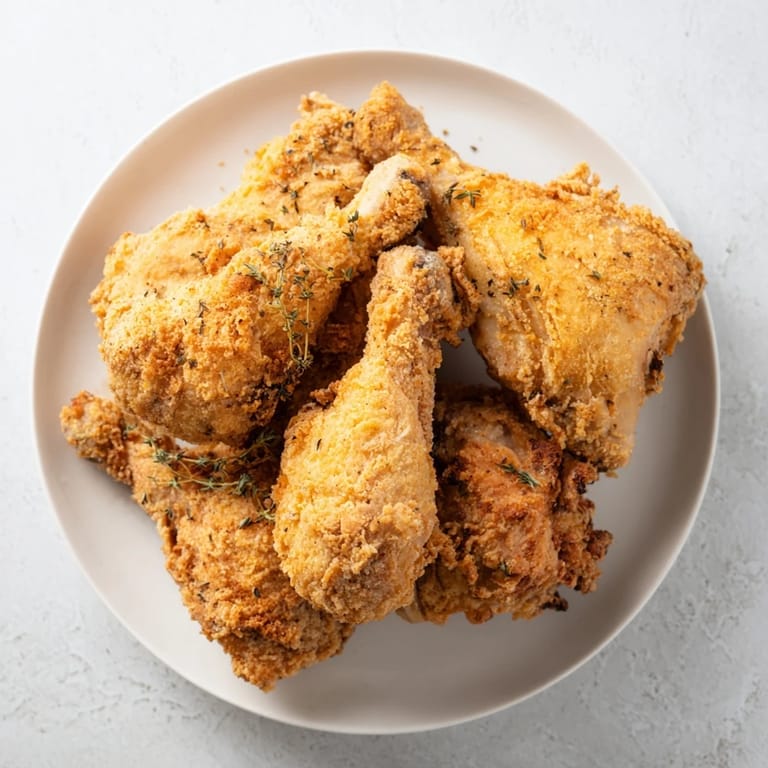 Save
Save Fried chicken isn't fancy, but when you make it properly it becomes something people gather around, something they talk about afterward, something they ask you to make again. That's the whole point.
Recipe Questions & Answers
- → How long should the chicken marinate?
Allow the chicken to marinate for at least 2 hours, or overnight for deeper flavor and tenderness.
- → What temperature is ideal for frying?
Heat the oil to 175°C (350°F) for optimal frying results, ensuring a crispy exterior and fully cooked interior.
- → Can I use boneless chicken pieces?
Yes, boneless pieces can be used but reduce the frying time to prevent overcooking.
- → How do I achieve extra crispy coating?
Double-dip the chicken by coating it in flour, dipping back in buttermilk, then flour again before frying.
- → What sides pair well with this chicken?
Classic choices include coleslaw, mashed potatoes, or a tangy hot sauce to complement the savory flavors.
- → What spices are used in the coating?
The coating includes garlic powder, onion powder, dried thyme, smoked paprika, salt, and black pepper for a balanced flavor.