 Save
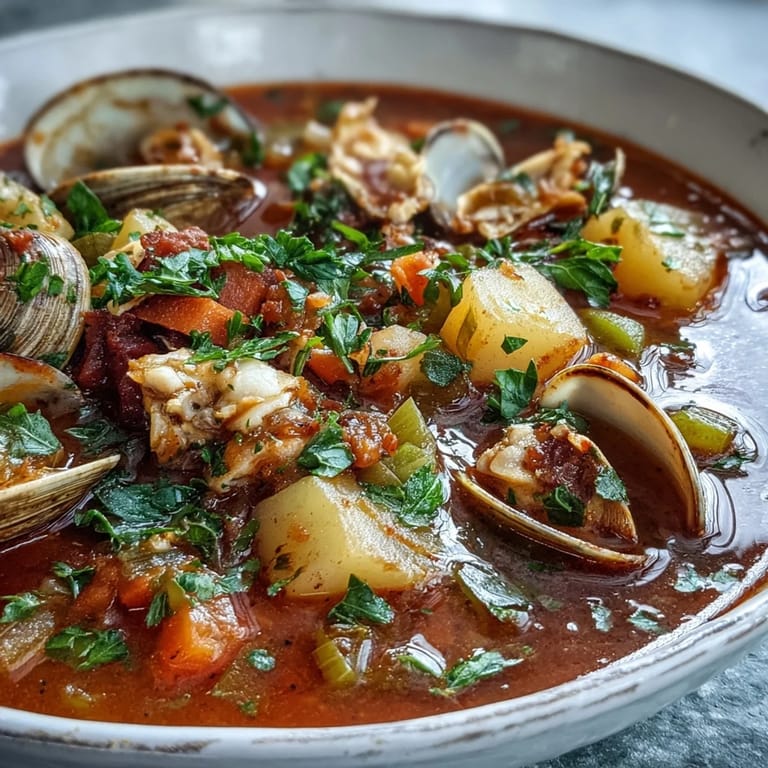
Save My neighbor knocked on my kitchen door one October afternoon with a bag of littleneck clams from the farmer's market, insisting I make something with them that wasn't the heavy cream-based chowder everyone expected. That conversation led me down a rabbit hole of old New England recipes, and I discovered Manhattan clam chowder—the tomato-bright cousin that gets overlooked in favor of its creamy sibling. The first bowl I made was slightly too salty, the second batch perfectly balanced, and by the third attempt I'd fallen completely under its spell.
I made this for my sister's book club on a gray November evening, and watching six women go quiet mid-conversation to focus on their soup was the best compliment I could ask for. One of them asked for the recipe before dessert even arrived, and another admitted she'd been intimidated by cooking clams her whole life until that moment. There's something about a bowl this vibrant and welcoming that makes people relax into the table.
Ingredients
- Fresh clams (littlenecks) or canned clams: Fresh clams need a good scrub under cold running water to remove sand and grit—don't skip this step or you'll have crunchy chowder. If using canned, reserve that juice like liquid gold; it's packed with briny flavor you can't replicate.
- Clam juice: The bottled stuff is essential when you don't have fresh clam cooking liquid, and honestly it's a pantry staple I never run out of anymore.
- Diced tomatoes with juice: Buy the canned version; fresh tomatoes in winter are a disappointment, and the acidity of canned tomatoes is exactly what this soup needs.
- Yukon gold potatoes: These hold their shape better than russets and have a buttery flavor that plays nicely with the briny clams and bright tomato.
- Onion, celery, and carrots: This aromatic base is where the flavor foundation gets built—don't rush the sautéing, let them soften and become sweet.
- Olive oil: Use a good quality oil here since you're not cooking it to death; it adds a subtle richness to the broth.
- Garlic, thyme, oregano, and bay leaves: These herbs create that classic New England coastal flavor without being heavy-handed.
- Red pepper flakes and black pepper: A light touch of heat wakes up all the other flavors and balances the tomato's acidity.
Tired of Takeout? 🥡
Get 10 meals you can make faster than delivery arrives. Seriously.
One email. No spam. Unsubscribe anytime.
Instructions
- Clean and steam the clams:
- If using fresh clams, scrub them under running water until the shells are clean, then place them in a large pot with 1 cup water. Cover and steam over medium-high heat for 5 to 7 minutes—you'll hear them pop open, and that's your cue. Remove the clams from their shells, chop them coarsely, and strain the cooking liquid through a fine mesh strainer to catch any sand; this liquid is precious, so don't waste it.
- Start the flavor base:
- Heat olive oil in a large heavy-bottomed pot over medium heat and add your chopped onion, celery, carrots, and green bell pepper. Let them cook gently for 6 to 8 minutes, stirring occasionally, until they're soft and fragrant—you're building the foundation that everything else will rest on.
- Bloom the aromatics:
- Stir in your minced garlic and cook for just 1 minute until the smell fills your kitchen. This brief cooking time mellows the garlic without burning it into bitterness.
- Build the broth:
- Add your diced potatoes, canned tomatoes with their juice, clam juice, reserved clam cooking liquid, thyme, oregano, bay leaves, red pepper flakes if using them, salt, and black pepper. Give everything a good stir so the seasonings are evenly distributed, then bring the pot to a boil.
- Simmer until tender:
- Reduce the heat to a gentle simmer and cook uncovered for 20 to 25 minutes, until the potatoes are fork-tender but not falling apart. The broth will deepen in color and the flavors will start playing together.
- Add the clams back in:
- Gently stir in your chopped clams and let them warm through for 3 to 5 minutes over the simmer. Don't boil them—clams are delicate and tough heat makes them rubbery.
- Taste and adjust:
- Remove the bay leaves, take a spoonful of broth and taste it honestly. Add a pinch more salt or pepper if it needs it—this is your moment to make it exactly right.
- Serve with intention:
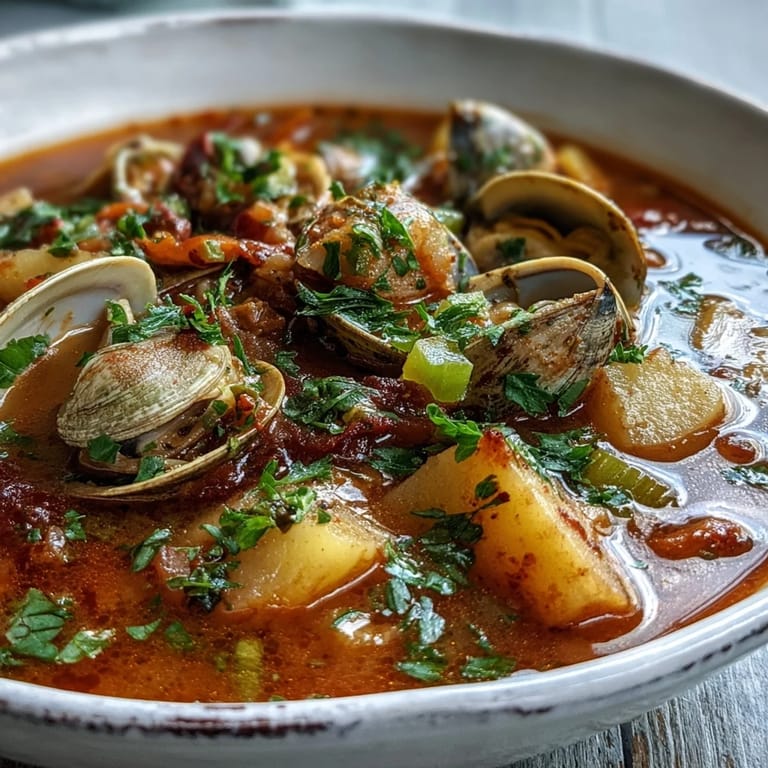
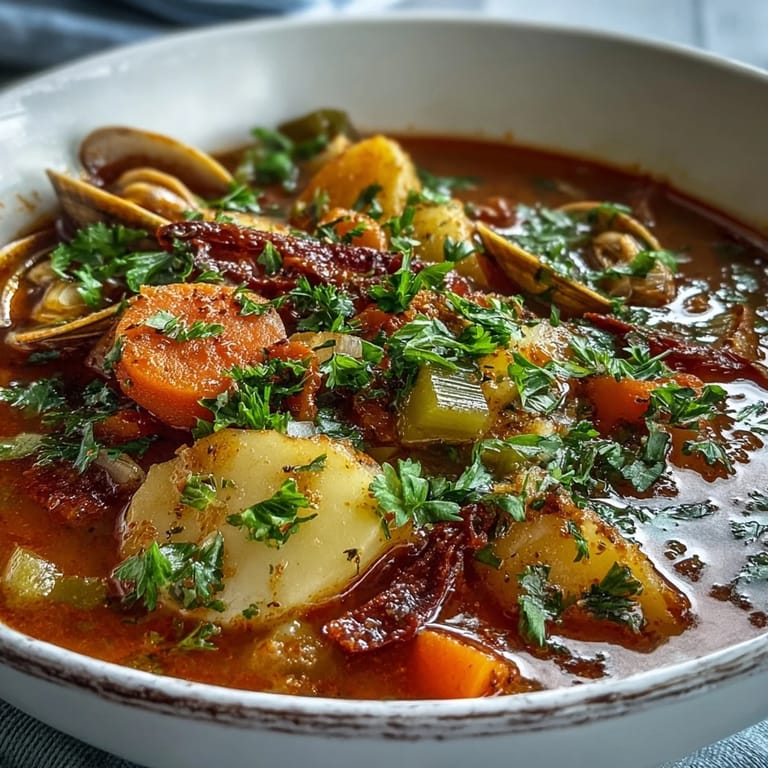
- Ladle the soup into bowls, scatter fresh parsley on top for color and a bright herbal note, and serve it hot with crusty bread alongside for soaking up every last drop.
 Save
Save 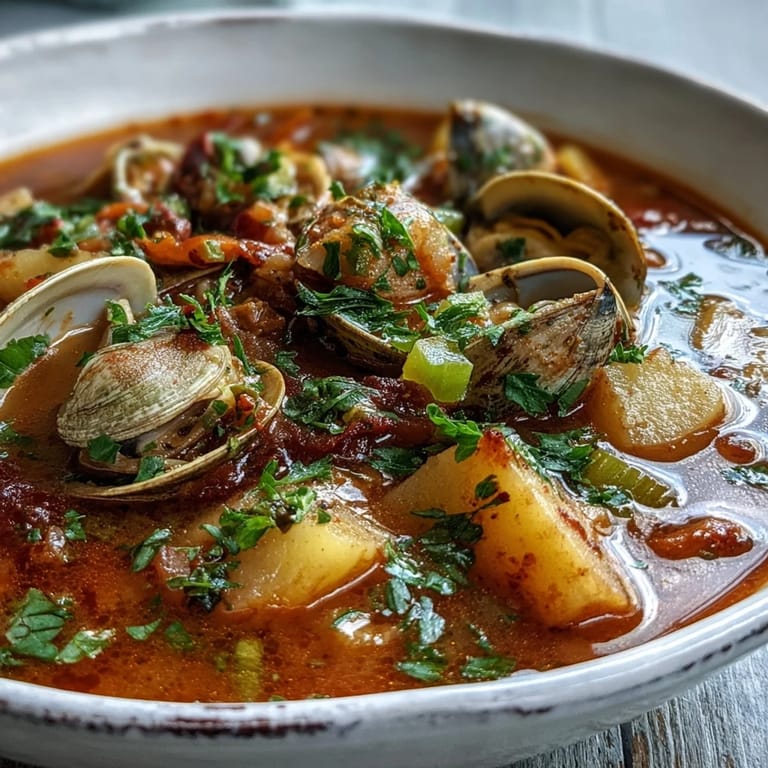 Save
Save There's a moment in cooking this soup when the tomato and clam juice come together, and the broth transforms from separate ingredients into something unified and alive. It feels like a small kitchen miracle every single time.
Variations and Personal Touches
I've made this soup at least twenty times now, and it's never the same twice because I'm always tinkering. Some months I add diced bacon for smokiness, other times I throw in corn kernels for a sweeter note, and once I added diced fennel just because I had it sitting around. The core recipe is strong enough to handle your own experiments—treat it like a canvas rather than a rigid instruction.
Pairing and Serving Suggestions
This soup deserves accompaniments that complement rather than compete with it. Crusty sourdough bread is perfect for dunking, but I've also served it alongside a simple green salad dressed in just lemon and olive oil, which cuts through the richness beautifully.
Storage and Make-Ahead Tips
Manhattan clam chowder actually improves the next day after the flavors have had time to settle and mingle, though I always store the clams separately if I'm planning to keep leftovers longer than a day. The soup reheats gently on the stovetop better than in the microwave, and it freezes well if you're planning ahead, though fresh is always preferred.
- Store in an airtight container in the refrigerator for up to three days, or freeze for up to three months.
- If reheating from frozen, thaw overnight in the refrigerator first, then warm gently on the stovetop over medium-low heat.
- Add the fresh parsley garnish right before serving so it stays bright green and doesn't wilt into the warm soup.
 Save
Save  Save
Save Every time I make this soup, I'm grateful for that October afternoon when my neighbor showed up with clams and a challenge. It became the dish I reach for when I want to feed people something that tastes like home, even if home is somewhere I've never actually been.
Recipe Questions & Answers
- → Can I use canned clams instead of fresh?
Yes, canned chopped clams work perfectly. Use 3 cups drained clams and reserve the juice to supplement your clam broth base.
- → What makes Manhattan chowder different from New England?
Manhattan chowder features a tomato-based broth that's lighter and tangier, while New England uses cream for a rich, white chowder.
- → How do I prevent the potatoes from getting mushy?
Cut potatoes into uniform pieces and simmer gently. Check for doneness at 20 minutes—they should be tender but still hold their shape.
- → Can I make this chowder ahead of time?
Absolutely. Prepare through step 5, refrigerate, then reheat gently and add clams just before serving to keep them tender.
- → What type of clams work best?
Littleneck or cherrystone clams are ideal for their sweet, tender meat. Scrub them thoroughly and discard any that don't open during steaming.
- → How can I add more depth to the flavor?
Add 2 ounces diced cooked bacon with the vegetables for smokiness, or include a splash of dry white wine when adding the tomatoes.