 Save
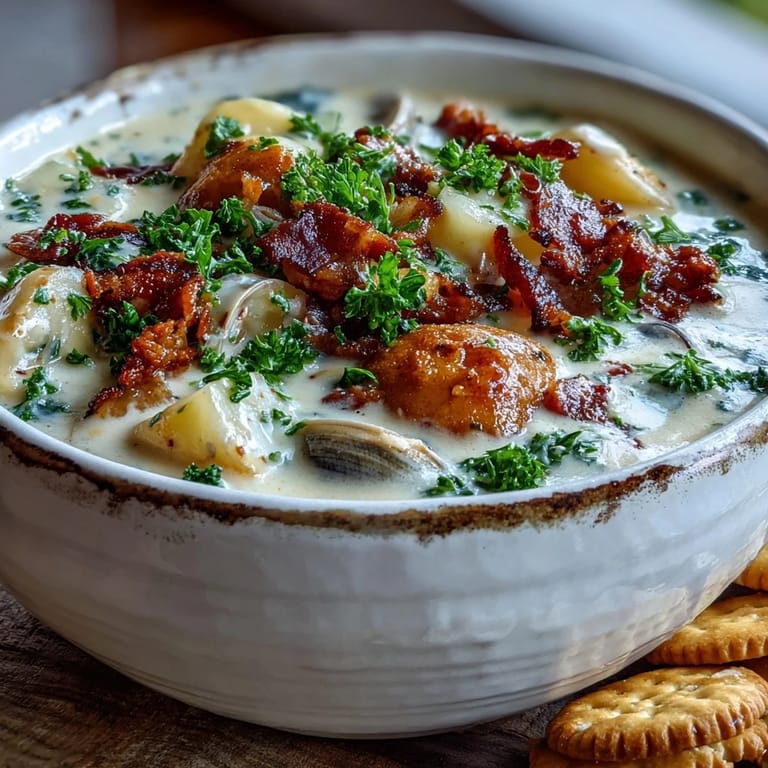
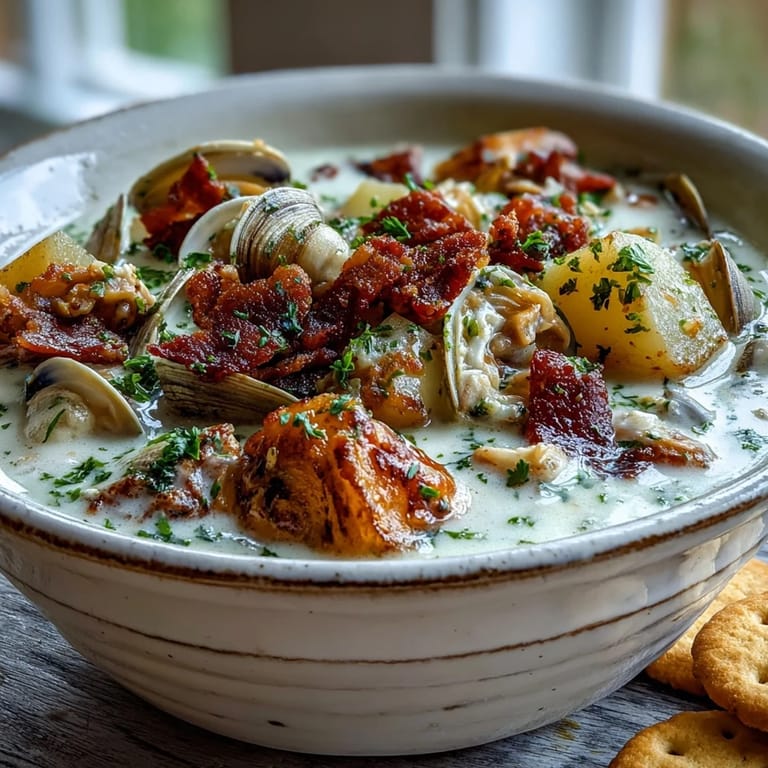
Save My first real bowl of New England clam chowder arrived on a gray October afternoon at a small harbor shack, and I remember being struck by how the cream seemed to glow against the white ceramic. The clams were impossibly tender, the potatoes had this waxy sweetness, and there was bacon underneath it all, working quietly in the background. Years later, I realized that chowder isn't really about complexity—it's about respecting each ingredient enough to let them sit together without fussing. When I finally made it at home, I understood why people return to this soup again and again.
I made this for my brother's surprise visit one winter, and he walked into the kitchen just as I was ladling it into bowls. The steam rose up and he went quiet for a second—that's the moment I knew the recipe worked. He asked for seconds before finishing his first bowl, and my sister texted later asking if I'd share the recipe. It's become one of those dishes that somehow brings people together without requiring a special occasion.
Ingredients
- Fresh clams (littlenecks) or canned chopped clams with juice, 2 pounds or 2 cups: Fresh clams give you that briny, ocean-forward flavor and let you control the liquid, but canned ones are honest shortcuts that deliver real results when life is busy.
- Unsalted butter, 4 tablespoons: This is your foundation for the roux and makes everything taste intentional rather than flat.
- Heavy cream, 1 cup: Don't skip this—it's what makes chowder feel luxurious without being heavy.
- Whole milk, 1 cup: Balances the cream so the soup tastes like dinner, not dessert.
- Bottled clam juice, 2 cups: This keeps the ocean flavor alive throughout the cooking, even after all the simmering.
- Yukon Gold potatoes, 2 medium: They hold their shape better than russets and have a subtle sweetness that anchors everything.
- Salt pork or thick-cut bacon, 4 ounces: This rendered fat is non-negotiable—it's where half the flavor lives.
- Onion and celery, 1 medium onion and 2 stalks: These are your aromatic base, softened slowly so they melt into the background rather than compete.
- All-purpose flour, 2 tablespoons: Just enough to thicken without making the chowder feel pasty.
- Bay leaf and dried thyme: These gentle herbs keep the soup tasting like the sea and the earth at once.
- Fresh parsley, 2 tablespoons: Stirred in at the end for brightness and a reminder that this soup is alive.
Tired of Takeout? 🥡
Get 10 meals you can make faster than delivery arrives. Seriously.
One email. No spam. Unsubscribe anytime.
Instructions
- Prepare your clams:
- If using fresh clams, scrub them under cold water—this takes patience, but you're removing sand that would wreck everything. Combine them with water in a large pot, cover, and steam over medium heat until the shells crack open, about six to eight minutes. Discard any stubborn ones that refuse to open, as they're telling you they aren't safe. Remove the clams, chop the meat into tender pieces, and pour that steaming liquid through a fine strainer to catch any hidden sand.
- Build your fat base:
- Dice your salt pork or bacon and cook it slowly in a large Dutch oven over medium heat, letting the fat render out gradually until the meat turns crisp and golden. This step is worth the extra two minutes—you're creating the foundation that makes everything taste less like soup and more like a memory.
- Make your soffritto:
- Add butter to the pot with the rendered fat, then add your diced onion and celery. Stir gently for about five minutes until they're soft but not browning—you want them yielding and sweet. Add the minced garlic for just one more minute, letting it perfume the oil.
- Create your roux:
- Sprinkle flour over the vegetables and stir constantly for two minutes, cooking out the raw flour taste. This thickens the chowder without lumps later on.
- Add your liquids carefully:
- Slowly whisk in the clam juice, milk, and cream, stirring constantly so the roux integrates smoothly. This is where patience prevents a grainy texture.
- Simmer with potatoes:
- Add your diced potatoes, the bay leaf, and thyme, then let everything simmer uncovered for twelve to fifteen minutes until the potatoes are fork-tender. Stir occasionally so nothing sticks to the bottom.
- Finish with clams:
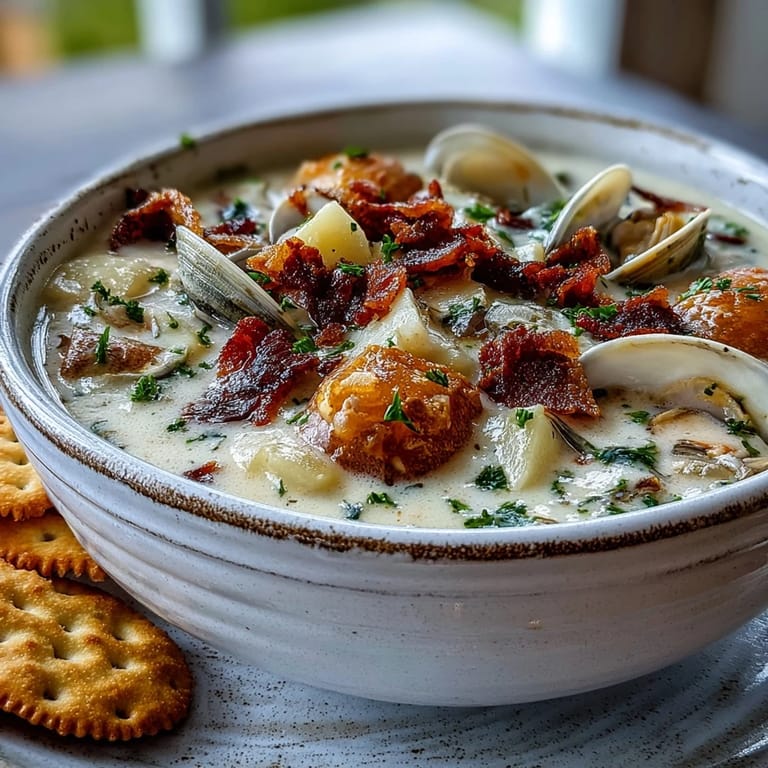
- Add your chopped clams and the crispy bacon back into the pot, stirring gently. Simmer for just three to five minutes more—overcooking clams turns them rubbery and sad.
- Season and serve:
- Fish out the bay leaf, stir in the fresh parsley, then taste and adjust with salt and pepper. Ladle into bowls and serve with oyster crackers or crusty bread.
 Save
Save There's a moment toward the end of cooking when the smell changes—from the sharp brightness of seafood to something richer, almost sweet—and that's when you know the flavors have finally found each other. That's when you stop watching the clock and just let yourself be grateful for a kitchen that smells this good.
Fresh vs. Canned Clams
Fresh clams give you theater and control—you get to steam them, watch them open, and handle their liquid yourself. Canned clams are honest and reliable, giving you real results without the cleanup or the worry of getting bad ones. I've made excellent chowder both ways, and I don't apologize for either choice. The real secret isn't the clam type; it's the care you put into rendering that salt pork and not skipping the roux.
The Cream Question
New England chowder demands cream—it's what separates it from the tomato-based Manhattan style and from every lighter soup you've ever made. But if you want something less rich, half-and-half works beautifully and still tastes indulgent. I've noticed that the creamier version freezes better and tastes even more comforting reheated on a cold day.
Serving and Pairing
This soup deserves a crisp white wine—Sauvignon Blanc cuts through the richness and echoes the briny undertone. Oyster crackers are traditional, but honestly, any good bread works. On busy weeknights, I make the chowder ahead and reheat it gently, and it somehow tastes better the next day.
- Serve in bowls that have been warmed for a few minutes so the chowder stays hot longer.
- A sprinkle of fresh chives or additional parsley on top catches the light and reminds you why you bothered cooking this in the first place.
- Leftover chowder keeps for three days refrigerated and freezes beautifully for up to three months, though you might want to add fresh cream when you reheat it.
 Save
Save This chowder has a way of turning an ordinary evening into something worth remembering, which might be the real reason people keep making it. It's proof that sometimes the best meals are the simple ones that remind us why we cook in the first place.
Recipe Questions & Answers
- → Can I use canned clams instead of fresh?
Yes, canned clams work perfectly. Use 2 cups of chopped clams with their juice, and add bottled clam juice to reach the required liquid amount. This saves time without sacrificing flavor.
- → What type of potatoes work best?
Yukon Gold or russet potatoes are ideal. Yukon Golds provide a creamier texture, while russets hold their shape well. Dice them uniformly for even cooking in about 12-15 minutes.
- → Can I make this chowder lighter?
Substitute half-and-half for heavy cream to reduce fat content. You can also use turkey bacon instead of pork bacon, though this will alter the traditional flavor profile slightly.
- → How do I prevent the chowder from curdling?
Avoid boiling after adding dairy and clams. Keep the heat at a gentle simmer. Boiling can cause the cream to separate and make the clams rubbery.
- → What should I serve with clam chowder?
Traditional accompaniments include oyster crackers or crusty bread for dipping. A crisp white wine like Sauvignon Blanc or Chardonnay pairs beautifully with the creamy, briny flavors.
- → How long can I store leftover chowder?
Store in an airtight container in the refrigerator for up to 3 days. Reheat gently over low heat, stirring frequently. Avoid freezing as dairy-based soups can separate when thawed.