 Save
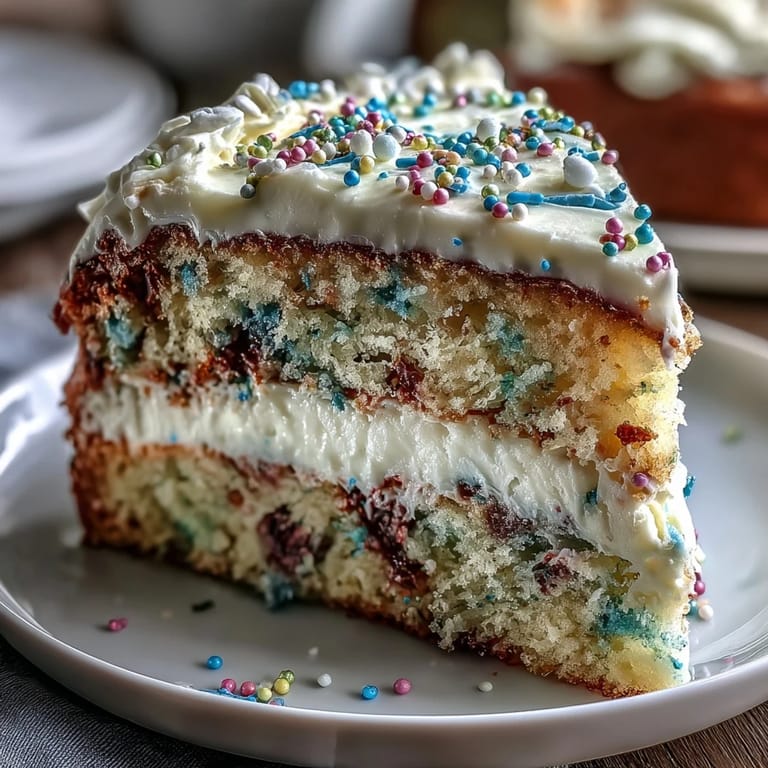
Save My neighbor knocked on the door last April with a box of pastel-colored sprinkles she'd found at an estate sale, asking if I had any ideas for them. I'd been craving something cheerful to mark the shift from winter, and those jimmies felt like permission to bake something unapologetically joyful. This cake emerged from that moment—a tender vanilla base studded with color, crowned with buttercream so soft and whimsical it almost seems a shame to cut into it.
I made this for my daughter's friends during a backyard tea party in May, and watching their faces light up when they saw the layers of soft pink, blue, and yellow buttercream made me understand why some people actually enjoy baking. One girl asked for the recipe immediately—not to make it herself, but to text to her mom as a hint.
Ingredients
- All-purpose flour: Use the weight measurement if you have a scale; scooping can pack too much flour into the cup and dry out your cake.
- Baking powder and baking soda: Check your expiration dates before starting—flat buttermilk substitutes won't save a cake with expired leaveners.
- Unsalted butter: Room temperature is non-negotiable; cold butter won't cream properly and you'll miss that fluffy base.
- Granulated sugar: This is where the tender crumb comes from, so don't skip the full amount or substitute brown sugar.
- Eggs: Room temperature eggs incorporate smoothly and create a more stable batter than cold ones straight from the fridge.
- Pure vanilla extract: Imitation will work but the cake tastes noticeably different—save the good stuff for desserts where vanilla is the star.
- Whole milk and sour cream: The combination creates moisture and a subtle tang that keeps the cake from tasting one-dimensional.
- Rainbow sprinkles: Use jimmies, not nonpareils or pearl sprinkles, which will sink or create a gritty texture; look for quality brands that won't bleed color into the batter.
- Unsalted butter for buttercream: This needs to be genuinely soft, almost on the verge of melting, so it whips into clouds.
- Powdered sugar: Sifting removes lumps and prevents grainy buttercream that feels chalky.
- Food coloring gels: Gels are essential over liquid food coloring because they won't thin out your buttercream the way drops would.
Tired of Takeout? 🥡
Get 10 meals you can make faster than delivery arrives. Seriously.
One email. No spam. Unsubscribe anytime.
Instructions
- Set your stage:
- Preheat to 350°F and line two 9-inch pans with parchment—this small step prevents the frustrating moment when cake sticks to the sides.
- Build your dry base:
- Whisk flour, baking powder, baking soda, and salt in a medium bowl; this distributes the leavening evenly so you won't have sunken spots.
- Cream butter and sugar:
- Beat them together for a solid three minutes until the mixture looks pale and fluffy, almost like mousse; this incorporates air that makes the crumb tender.
- Add eggs slowly:
- Add one egg at a time, beating well after each, then pour in vanilla; rushing this step or adding cold eggs creates a broken, curdled-looking batter that bakes up dense.
- Prepare your wet mixture:
- Whisk milk and sour cream together in a separate bowl until combined; this prevents lumps of sour cream hiding in your batter.
- Alternate in three parts:
- Add flour, milk, flour, milk, flour—always starting and ending with flour and mixing just until you don't see white streaks; overmixing develops gluten and makes the cake tough.
- Fold in the sprinkles:
- Use a spatula to gently fold the jimmies in at the very end so the batter stays light and the sprinkles don't bleed into the crumb.
- Fill your pans:
- Divide batter evenly and smooth the tops gently with a spatula; uneven baking pans create domed layers that need trimming.
- Bake with patience:
- Check at 28 minutes with a toothpick—it should come out clean with no wet batter clinging to it; ovens vary, so trust your toothpick, not the clock.
- Cool strategically:
- Let cakes rest in the pans for ten minutes so they set slightly, then turn onto cooling racks to cool completely; warm cakes crumble when frosted.
- Whip the butter:
- Beat butter until smooth and pale, about two minutes; this starts incorporating air before the sugar goes in.
- Add sugar gradually:
- Mix on low at first to prevent clouds of powdered sugar escaping your bowl, then increase speed once incorporated.
- Create the fluff:
- Add milk, vanilla, and salt, then beat on high for two to three minutes; you want this to look like fluffy clouds, almost mousse-like.
- Tint with intention:
- Divide into four bowls and add just a tiny dab of gel color at a time—a little goes surprisingly far with gels, and you can always add more.
- Decorate with joy:
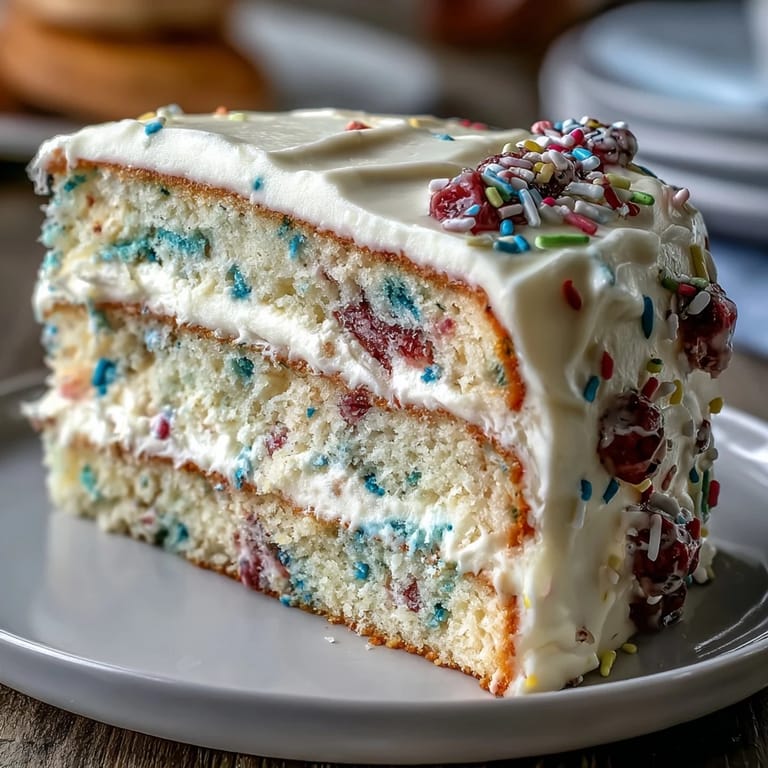
- Dollop or pipe colored buttercream onto layers and swirl colors together; there's no wrong way, and the imperfections look charmingly homemade.
 Save
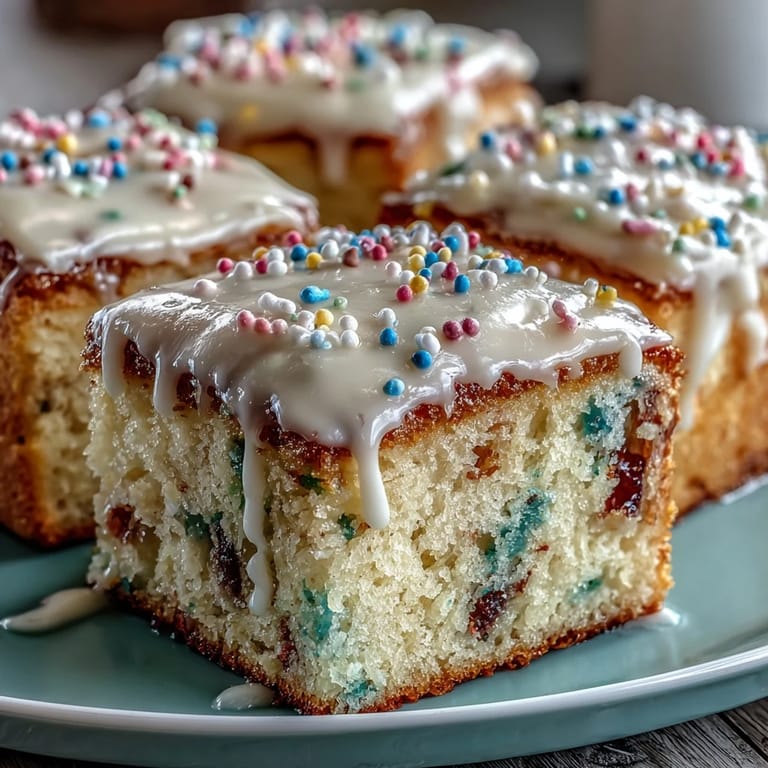
Save There's something almost ceremonial about watching two plain vanilla layers transform when pastel buttercream gets swirled between them—like you've turned afternoon baking into actual celebration. It's the kind of cake that makes people slow down and take a photo before eating, which is exactly the point.
Why This Cake Works for Spring
Spring needs color, and this cake delivers without feeling overwrought or artificial. The vanilla stays quiet and classic while the sprinkles and pastel frosting do all the visual celebrating. It's the dessert equivalent of opening windows and finding the sun has actually stayed.
The Sour Cream Secret
Most vanilla cakes rely only on buttermilk for tang and moisture, but adding sour cream creates a subtly richer, more tender crumb that tastes genuinely better. The sour cream stays in the background—you don't taste it directly, but you notice the cake feels luxurious on your tongue instead of dry or one-note.
Decorating Without Stress
The beauty of pastel buttercream is that it's forgiving and fun; swirls and color mixing happen naturally without needing piping skills. You're not making a showpiece cake—you're making a cake that's pretty because it's cheerful, not because you spent three hours with a pastry bag.
- Let buttercream come to room temperature before decorating so it spreads smoothly without tearing the cake.
- Use an offset spatula for a more organic look, or pipe dollops if you want defined texture.
- The pastels mix beautifully, so don't worry about achieving perfect color separation—blended hues look modern and intentional.
 Save
Save This cake has become my go-to for moments that deserve a little more joy than usual. It's simple enough to make on a whim, but special enough that it feels like a gift.
Recipe Questions & Answers
- → What makes the cake light and moist?
The combination of sour cream and whole milk in the batter adds moisture and tenderness, creating a soft crumb.
- → How can I prevent sprinkles from bleeding colors?
Use high-quality jimmie-type sprinkles and gently fold them into the batter to keep their colors vibrant during baking.
- → What coloring should I use for the buttercream?
Pastel gel food colorings like pink, blue, yellow, and purple provide soft, whimsical tints perfect for spring-themed decoration.
- → Can Greek yogurt replace sour cream?
Yes, Greek yogurt can be used as a substitute for sour cream to maintain moisture with a slightly tangy flavor.
- → What is the best baking pan size for this cake?
Two 9-inch round pans are recommended to ensure even baking and the right cake height for layering.
- → How long should I bake cupcakes if I prefer them over a cake?
Cupcakes require a shorter baking time, typically between 22 and 24 minutes, to avoid drying out.