 Save
Save There's something about the smell of cinnamon and butter meeting hot pastry that takes me back to my grandmother's kitchen, where she'd let me press my nose against the oven window while her apple pie baked to a deep golden brown. I didn't understand then why she insisted on mixing two kinds of apples, or why the crust had to rest in the cold, but years later when I finally made one that turned out as good as hers, all those small details suddenly made sense. This recipe is that lesson learned—simple enough to feel approachable, but built on the kind of careful choices that separate a good pie from an unforgettable one.
I'll never forget the first time I brought a homemade apple pie to a potluck dinner—I was nervous about how it would stack up against the store-bought ones, but within twenty minutes there was barely a slice left. One friend asked for the recipe right there at the table, pie fork still in hand, and I realized that this was the kind of dish worth making from scratch.
Ingredients
- All-purpose flour (2 1/2 cups): The foundation of a tender crust; keep it cool and handle it gently so the butter stays distinct and creates those lovely flaky layers.
- Unsalted butter, cold and cubed (1 cup): Cold butter is your secret to a crust that shatters when you bite it; if it starts to soften, pop it back in the freezer for a few minutes.
- Ice water (6–8 tbsp): Add it slowly and stop as soon as the dough comes together; too much water makes a tough crust that won't forgive you.
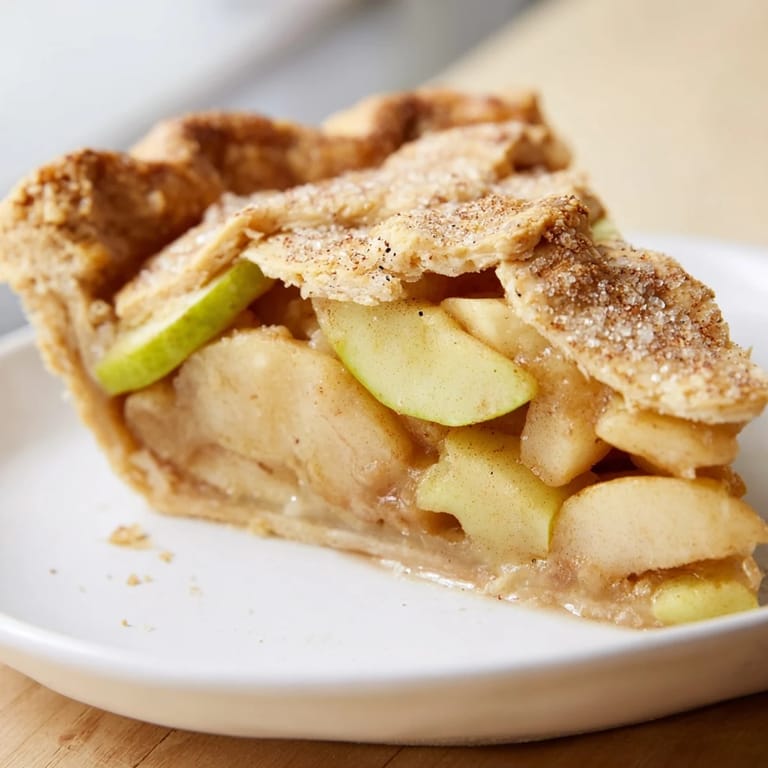
- Granny Smith and Honeycrisp apples (6–7 medium): The mix matters—Granny Smiths hold their shape and add brightness, while Honeycrisps bring sweetness and tenderness.
- Granulated and brown sugar (3/4 cup + 1/4 cup): Together they create depth; the brown sugar adds subtle molasses notes that make people wonder what your secret is.
- Ground cinnamon (1 1/2 tsp) and nutmeg (1/4 tsp): These warm spices should smell fragrant when you first open the jars; stale spices will disappoint you halfway through baking.
- All-purpose flour for filling (2 tbsp): This thickens the juices so your pie isn't watery; don't skip it or you'll end up with a soggy bottom crust.
- Lemon juice (1 tbsp): A small amount brightens the filling and keeps the apples from tasting one-note.
- Egg wash (1 egg + 1 tbsp milk): This is what gives the crust that shiny, appetizing golden color.
Tired of Takeout? 🥡
Get 10 meals you can make faster than delivery arrives. Seriously.
One email. No spam. Unsubscribe anytime.
Instructions
- Mix the dry ingredients for the crust:
- Whisk flour, salt, and sugar together in a large bowl so everything is evenly distributed. This small step prevents pockets of salt in your finished crust.
- Cut in the cold butter:
- Add cubed cold butter and work it in with a pastry blender or your fingertips until the mixture looks like coarse crumbs with some pea-sized pieces still visible. Those visible pieces of butter are what create the flakiness, so resist the urge to overwork it.
- Bring the dough together with ice water:
- Sprinkle ice water over the mixture a tablespoon at a time, tossing gently with a fork until the dough just barely holds together when squeezed. Stop adding water the moment it comes together—this is the part that separates a tender crust from a tough one.
- Chill the dough:
- Divide dough in half, shape into disks, wrap tightly in plastic wrap, and refrigerate for at least 1 hour. If you're in a hurry, 30 minutes in the freezer works in a pinch, but the full hour lets the flour fully hydrate and makes rolling easier.
- Prepare the apple filling:
- Peel, core, and slice your apples into 1/4-inch slices—a mandoline makes this faster, but a sharp knife and patience work just as well. In a bowl, toss the apples gently with both sugars, spices, salt, flour, and lemon juice, then let them sit while you roll out the crust so the juices start to release.
- Roll out the bottom crust:
- On a lightly floured surface, roll one dough disk into a circle about 11 inches across and 1/8-inch thick. If the dough cracks at the edges, that's normal—just pinch it back together and keep rolling.
- Line the pie dish:
- Carefully transfer the crust to your 9-inch pie dish, letting it settle naturally into the corners without stretching. Overstretched dough will shrink as it bakes and pull away from the edges.
- Fill and dot with butter:
- Pour the apple mixture into the crust, mounding it slightly higher in the center so it settles as it cooks. Scatter the small butter pieces over the top—they'll melt into the filling and add richness.
- Add the top crust:
- Roll out the second dough disk and lay it over the filling. Trim the excess dough from the edges, leaving about an inch of overhang, then fold the edges under and crimp them with your fingers or a fork.
- Cut steam vents and brush with egg wash:
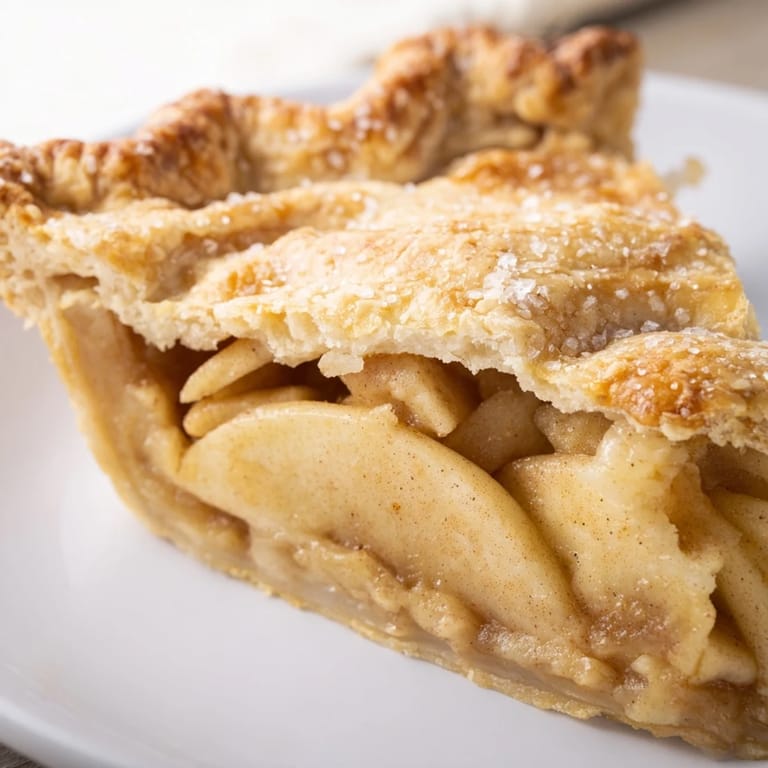
- Cut 4–5 small slits in the top crust so steam can escape as the filling bubbles and bakes. Whisk egg and milk together, brush it over the top crust, and sprinkle with coarse sugar if you want a sparkly, crunchy surface.
- Bake until golden:
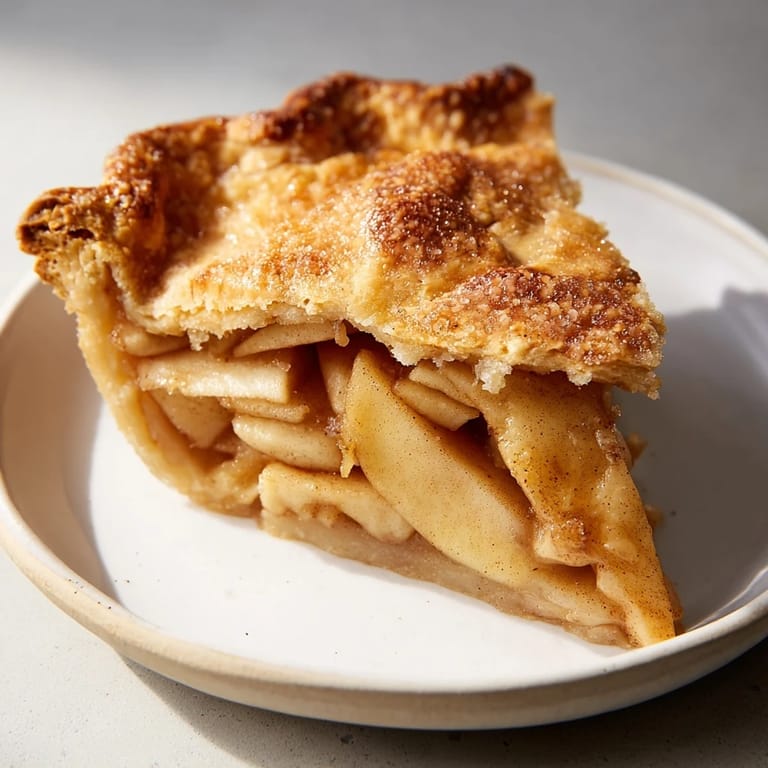
- Place the pie on the lower rack of a preheated 400°F oven and bake for 45–55 minutes. You'll know it's done when the crust is a deep golden brown and you see filling bubbling out at the edges; if the crust edges are browning too fast, tent them loosely with foil.
- Cool before slicing:
- Let the pie rest on a wire rack for at least 2 hours—this gives the filling time to set so each slice stays neat instead of falling apart. It's hard to wait, but this step makes all the difference.
 Save
Save The moment that stands out in my kitchen memory is when a friend bit into a slice and got completely quiet—the kind of quiet that means something tastes exactly right. That's when I understood that all the care that goes into making a pie from scratch isn't about showing off; it's about the few minutes of quiet contentment a good pie can create at a table.
Choosing and Preparing Your Apples
The apple variety really does matter, and mixing two kinds gives you better balance than using just one. Granny Smith apples are crisp and tart, holding their shape beautifully during baking, while Honeycrisp apples bring natural sweetness and a tender texture that melts into the filling. If you can't find Honeycrisp, Pink Lady or Gala apples work well as substitutes. Peel them just before you're ready to assemble the pie so they don't brown, and don't panic if a few pieces break—they all end up delicious in the filling anyway.
The Crust: Why Patience Pays Off
A good pie crust is less about following exact measurements and more about understanding what you're looking for: cold butter distinct from the flour, a dough that barely comes together, and plenty of resting time. The resting period in the refrigerator lets the flour fully hydrate and the gluten relax, which means your crust will roll out smoothly and stay tender when baked instead of shrinking and toughening up. Some people think they're saving time by skipping the chill, but those extra hours make the actual rolling and baking easier, not harder.
Variations and Personal Touches
Once you've made this pie once or twice, you'll start to notice small adjustments that suit your taste. Some people add a handful of raisins or dried cranberries to the filling for chewiness, while others swear by a tiny pinch of ground ginger alongside the cinnamon. A lattice crust looks more impressive than a solid top, and it's not as hard as it seems—just cut the top dough into thin strips and weave them back and forth over the filling. After dinner, the pie pairs beautifully with a cup of strong coffee or even a sip of lightly sweet Riesling if you're in the mood for something special.
- Add a teaspoon of vanilla extract to the egg wash for extra flavor and shine.
- If your apples are very tart, use closer to 3/4 cup of the granulated sugar and less brown sugar.
- Brush the finished crust with a little milk or cream instead of egg if you're avoiding eggs, though the egg wash does brown more beautifully.
 Save
Save There's a warmth that comes from pulling a homemade apple pie out of the oven, and it has less to do with temperature and more to do with knowing you made something from scratch. Serve it warm or at room temperature with vanilla ice cream melting into the filling, and watch how a simple dessert becomes a moment people remember.
Recipe Questions & Answers
- → What apples work best for this dessert?
Combining tart Granny Smith with sweet Honeycrisp creates a balanced, flavorful filling with ideal texture.
- → How do I achieve a flaky crust?
Use cold, cubed butter cut into flour, and ice water to bring the dough together without overworking it, ensuring flakiness.
- → Can I prepare the crust ahead of time?
Yes, chilling the dough for at least an hour helps relax gluten and improves handling and texture.
- → How to prevent the crust edges from over-browning?
Cover the edges with foil partway through baking to protect them while the center finishes cooking.
- → What variations can enhance the filling's flavor?
Additions like raisins or a pinch of ground ginger bring extra warmth and texture to the spiced apples.
- → How to store leftovers?
Cover and keep refrigerated for up to 3 days; reheat gently before serving to preserve texture and flavor.