 Save
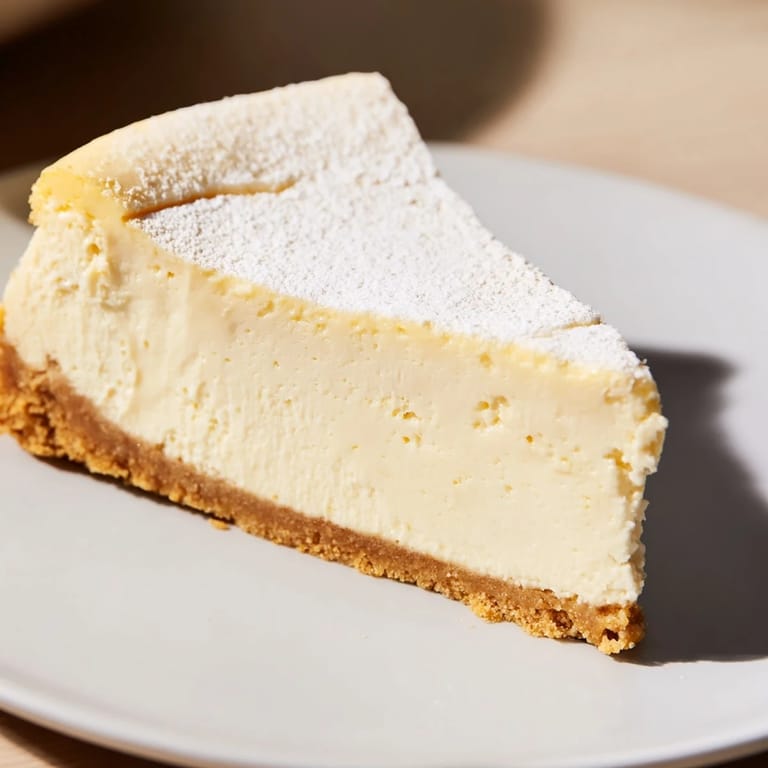
Save The first time I made a proper New York cheesecake, I was standing in my kitchen at midnight, convinced I'd somehow turned cream cheese into rubber. My aunt had handed me her recipe on a crumpled index card that morning, and I'd spent the entire day worrying I'd mess it up. But something shifted when I pulled that springform pan out of the oven and saw the gentle jiggle in the center—that's when I understood the magic. This cake has been my showstopper ever since, the one dessert that makes people ask for seconds before they even finish the first bite.
I'll never forget bringing a slice to my neighbor Sarah, who'd been going through a rough patch. She took one bite and teared up, saying it reminded her of Sunday dinners at her grandmother's table. That's when I realized this cake wasn't just dessert—it was a moment of comfort wrapped in butter and cream cheese.
Ingredients
- Graham cracker crumbs (200 g): These form the foundation, and you want them slightly sandy when mixed with butter, not overly packed down.
- Unsalted butter, melted (100 g): Melt it completely so the crumbs coat evenly—this is what keeps the crust from turning to dust when you slice.
- Granulated sugar for crust (2 tbsp): Just a whisper of sweetness; it balances the salty butter without making the crust candy-like.
- Full-fat cream cheese (900 g), room temperature: This is non-negotiable—cold cream cheese creates lumps that no amount of beating fixes, and those lumps haunt you through baking.
- Granulated sugar for filling (200 g): Beat this in slowly; it dissolves into the cheese and creates that velvet texture.
- Sour cream (240 ml), room temperature: This adds tang and keeps the cake from being one-note sweet; it's the secret that makes people ask what you did differently.
- Large eggs (3), room temperature: Cold eggs won't blend smoothly and can create streaks of raw egg white in the filling.
- Cornstarch (1 tbsp): A tiny amount that prevents cracks by absorbing some moisture during baking.
- Pure vanilla extract (2 tsp): Real vanilla makes an enormous difference; the cheap stuff fades into nothing.
- Fresh lemon juice (1 tbsp): A squeeze that brightens everything without being obvious, cutting through richness.
- Salt (1/4 tsp): Never skip this—it's the volume knob that makes every other flavor pop.
Tired of Takeout? 🥡
Get 10 meals you can make faster than delivery arrives. Seriously.
One email. No spam. Unsubscribe anytime.
Instructions
- Prepare your stage:
- Heat the oven to 160°C (325°F) and line your 23 cm springform pan with parchment paper on the bottom. Grease the sides well—this prevents the filling from sticking where you don't want it.
- Build the foundation:
- Toss graham cracker crumbs with melted butter, sugar, and salt until it looks like wet sand between your fingers. Press it firmly and evenly into the pan, then bake for 10 minutes until it starts to smell toasted and wonderful. Let it cool while you move on.
- Whip the cheese:
- In a large bowl, beat room temperature cream cheese for 2 minutes until it's pale and fluffy, like clouds. Scrape down the sides constantly—lumps hide in the corners and will ruin everything.
- Sweeten and smooth:
- Gradually add sugar while beating, then pour in sour cream, vanilla, lemon juice, cornstarch, and salt. Mix just until combined; overmixing incorporates air bubbles that create cracks you'll regret.
- Add the eggs carefully:
- Crack one egg directly into the bowl, mix on low speed, then scrape the sides. Repeat until all three eggs are incorporated. This patience is what separates silky cheesecake from dense, rubbery ones.
- Create the water bath:
- Pour the filling over the cooled crust and smooth the top. Place the springform pan inside a larger roasting pan, then pour hot water into the roasting pan until it reaches halfway up the sides of the cheesecake pan. The water cushions it with gentle, even heat.
- Bake with intention:
- Slide it into the oven for 55–65 minutes—you're looking for set edges but a center that jiggles about the size of a coin when you gently shake the pan. The middle will continue cooking as it cools.
- Cool slowly:
- Turn off the oven, crack the door open an inch or two, and let the cheesecake sit inside for a full hour. This gradual temperature change prevents the sudden contraction that causes deep cracks to form.
- The waiting game:
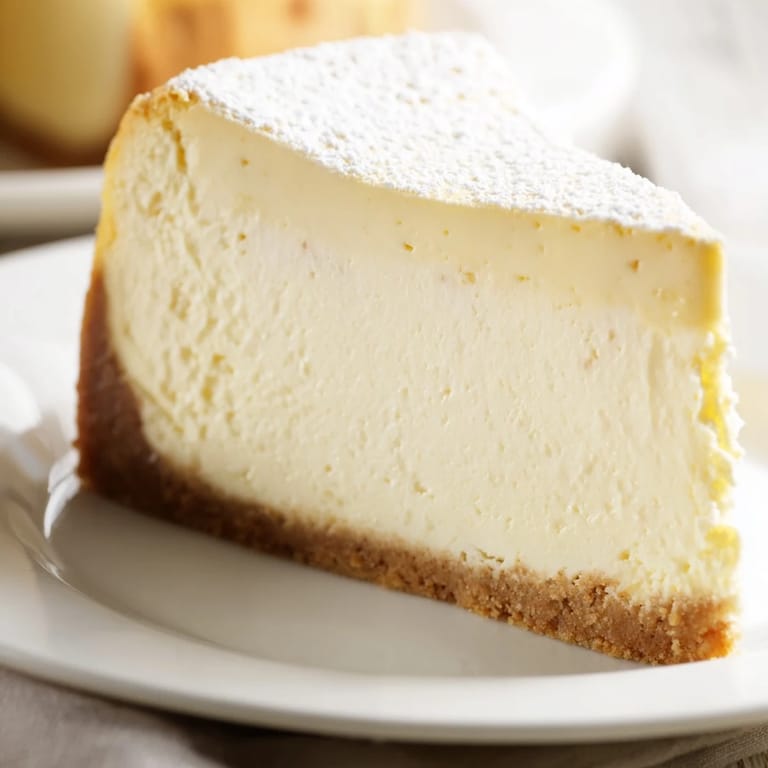
- Remove from the oven and run a thin knife around the edges to loosen it from the pan. Let it come to room temperature, then refrigerate for at least 6 hours, preferably overnight—patience transforms it from warm cake into silky perfection.
- Finish and serve:
- Mix sour cream, powdered sugar, and vanilla for the topping if you like. Slice with a hot, clean knife (dip it in hot water between cuts and wipe it dry) for clean edges.
 Save
Save I learned the hard way that cheesecake isn't just about technique—it's about presence. When you slow down and respect each step, when you don't rush the cooling or skip the water bath, people taste that attention. It becomes something worth remembering.
Why the Water Bath Matters
The water bath does something almost magical—it surrounds the cheesecake with humid, even heat that prevents the top from baking too fast and cracking. Without it, you're gambling. With it, you're almost guaranteed success. I've watched this make the difference between a cheesecake that's dry and slightly grainy versus one that's silky all the way through. It's worth the extra pan and effort.
Room Temperature Is Everything
Cold cream cheese won't blend smoothly, no matter how long you beat it. The same goes for eggs and sour cream. It sounds fussy, but take ingredients out of the fridge thirty minutes before you start mixing. You'll feel the difference the moment your mixer hits the cream cheese—it should be yielding and soft, never stiff or cold. This one detail changes everything about the texture.
Variations and Finishing Touches
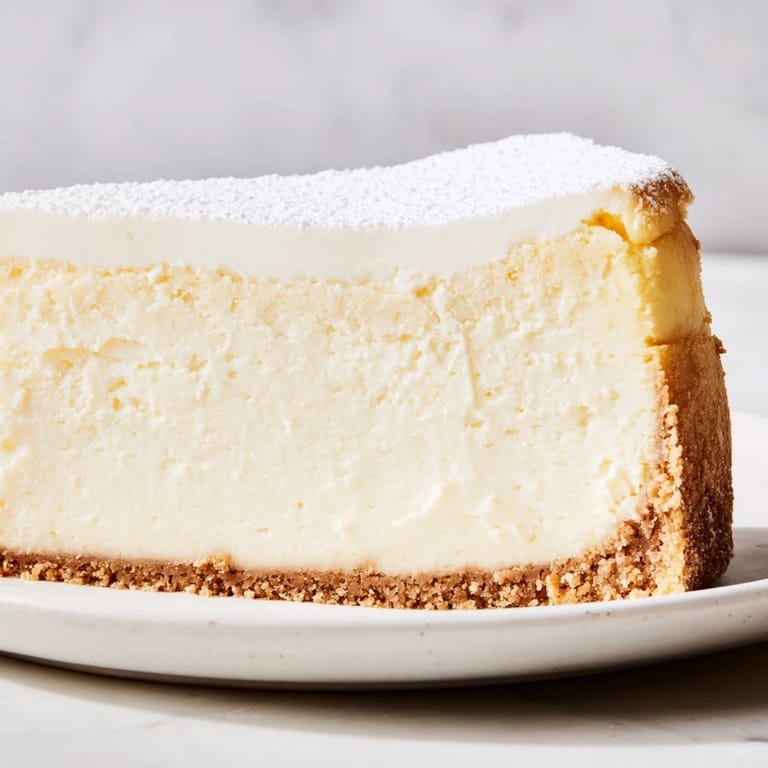
This plain canvas is perfect as is, but it also begs for creativity. Swirl melted chocolate into the filling before baking for a marbled effect, or pile fresh berries on top after chilling for brightness and color. Fresh fruit compote adds elegance, while a drizzle of berry coulis feels like something from a bakery case.
- For chocolate variation, swirl dark chocolate into the filling just before baking, keeping it light so it doesn't completely blend in.
- Berries, stone fruits, or berry coulis add freshness that cuts beautifully through the richness.
- A pair with cold dessert wine or even strong coffee makes the moment feel intentional and complete.
 Save
Save This cheesecake has become the dessert I reach for when I want to show someone they matter. There's something about the time and care it asks for that feels like an act of kindness. Make it, chill it, slice it, and watch what happens next.
Recipe Questions & Answers
- → What makes the crust for this cheesecake unique?
The crust combines graham cracker crumbs, melted butter, sugar, and a pinch of salt, pressed firmly and pre-baked to create a crunchy base that complements the creamy filling.
- → How is the cheesecake baked evenly without cracking?
By placing the springform pan in a water bath, steam helps regulate temperature and moisture, resulting in a smooth texture without cracks.
- → Can the topping be omitted or substituted?
The sour cream topping is optional but adds a tangy balance. It can be omitted or replaced with fresh fruit compote or powdered sugar.
- → What is the recommended chilling time before serving?
Chill the cheesecake for at least 6 hours, preferably overnight, to develop its dense texture and chilled consistency.
- → Are any ingredient temperatures important for the best result?
Using room temperature cream cheese, eggs, and sour cream ensures smoother mixing and a creamier final texture.
- → Can this dessert be customized with flavors?
Yes, swirling melted chocolate into the filling before baking or topping with fresh berries can add delightful variations.