 Save
Save The first time I made clam chowder, I was standing in a fish market on a grey January morning, watching the vendor shove a handful of live clams into a paper bag. My grandmother had called the night before, voice tight with a cold, asking if I remembered her kitchen on winter Sundays. I didn't have a recipe, just her vague directions and the smell memory of cream and salt. Three hours later, my apartment smelled like the ocean, and I finally understood why she made this soup every February without fail.
I made this for my neighbor after her surgery, carrying it up three flights of stairs in a ceramic pot I'd thrifted years ago. She cried a little when she tasted it, not because it was fancy, but because it was warm and someone had spent time thinking about what her body needed. That's when cooking stopped being about technique and started being about showing up.
Ingredients
- Fresh clams (900 g / 2 lbs): Scrub them under cold running water until they stop releasing sand; this one step prevents grainy disappointment. If fresh clams intimidate you, canned chopped ones work beautifully and save you the steaming step entirely.
- Potatoes (2 medium): Dice them smaller than you think you need to—they cook faster and give the chowder a creamy texture when they break down slightly.
- Onion, celery, and carrot (1 medium, 2 stalks, 1 medium): The holy trinity of flavor; finely chop them so they almost disappear into the cream, becoming essence rather than chunks.
- Heavy cream (240 ml / 1 cup): Don't skimp here; it's what makes this a chowder and not a thin soup.
- Unsalted butter (60 g / 4 tbsp): The foundation for your roux, which thickens everything perfectly without lumps if you're patient.
- Whole milk (240 ml / 1 cup): This balances the richness and keeps the soup from feeling too heavy.
- Clam juice (500 ml / 2 cups): The liquid gold that makes this taste like the ocean; use the reserved liquid from steaming fresh clams if possible.
- Water (240 ml / 1 cup): Dilutes the intensity just enough so the clams stay the star.
- Garlic (2 cloves), bay leaf, dried thyme, salt, and black pepper: These seasonings layer quietly in the background, building depth without announcing themselves.
- Fresh parsley (2 tbsp): Scatter it on top just before serving for a bright finish and a whisper of fresh green.
Tired of Takeout? 🥡
Get 10 meals you can make faster than delivery arrives. Seriously.
One email. No spam. Unsubscribe anytime.
Instructions
- Steam the clams (if using fresh):
- Fill a large pot with 1 cup water, add scrubbed clams, cover, and place over medium heat. Listen for the gentle clatter of shells popping open—usually 5 to 7 minutes. Discard any clams that stubbornly stay shut; they're telling you not to eat them. Let the liquid cool, strain it carefully to catch any sand, and chop the tender clam meat into bite-sized pieces.
- Start the base:
- Melt butter in your cleaned pot over medium heat until it foams and quiets. Add chopped onion, celery, and carrot, stirring occasionally until they soften and turn translucent—about 5 minutes. Add minced garlic and cook just long enough to smell its sweetness, about 1 minute.
- Build the roux:
- Sprinkle flour directly over the vegetables and stir constantly with a wooden spoon, coating everything evenly. Cook for 2 minutes, watching it darken slightly; this cooks out the raw flour taste and creates the thickening agent.
- Add the liquid carefully:
- Whisk in clam juice, milk, and water slowly, stirring constantly to break up any flour lumps before they set. Add diced potatoes, the bay leaf, thyme, salt, and pepper, then bring everything to a gentle simmer.
- Let it simmer:
- Leave the pot uncovered for 15 to 20 minutes, allowing the potatoes to soften and the flavors to meld. The surface will bubble gently; resist the urge to rush this step by turning up the heat.
- Finish with clams and cream:
- Stir in the chopped clams and heavy cream, then simmer for just 5 more minutes so the cream warms through without boiling. Fish out and discard the bay leaf, taste the chowder, and add salt or pepper until it sings.
- Serve with intention:
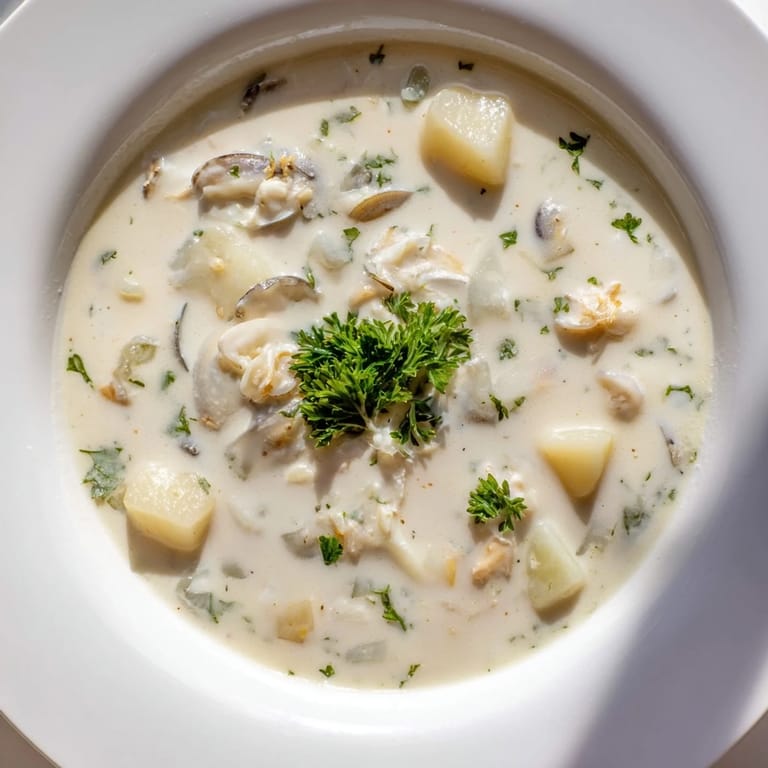
- Ladle into bowls, scatter fresh parsley across the top, and serve while steaming hot alongside oyster crackers or a thick slice of crusty bread for soaking.
 Save
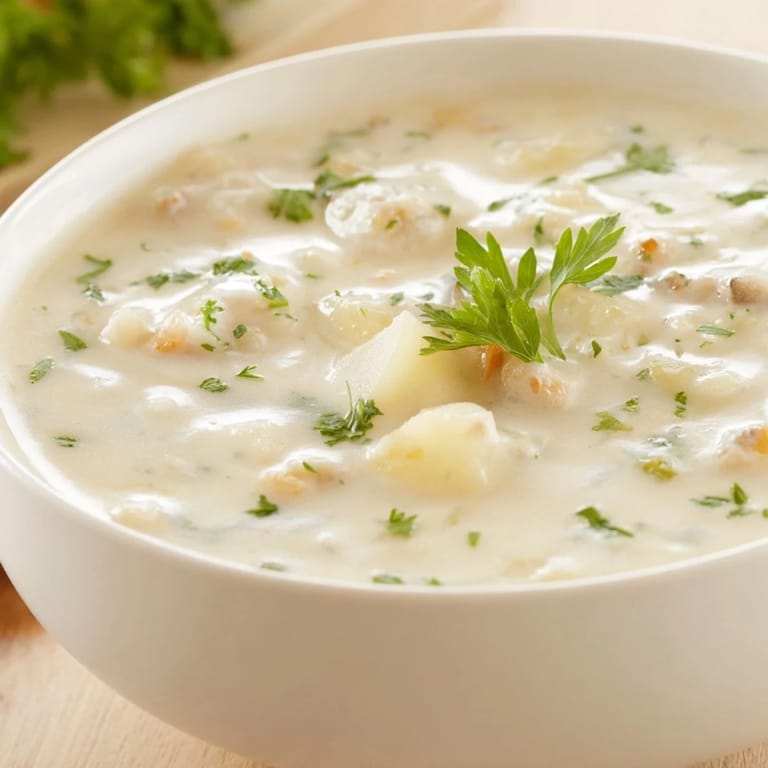
Save My sister once made this chowder for a potluck, and someone asked for the recipe immediately. That moment—when food stops being sustenance and becomes a gift someone wants to recreate—that's when you know you've made something worth making again.
Fresh vs. Canned Clams
The choice between fresh and canned clams is purely practical, not a hierarchy. Fresh clams require steaming and add theater to the cooking process; their cooking liquid is briny and pure. Canned clams are already tender, save you the steaming step, and work beautifully if you're short on time or live somewhere landlocked. I've made this chowder both ways, and the difference is subtle—fresh tastes like the sea, canned tastes like a memory of the sea, and both are worth making.
The Roux: Your Secret Weapon
The flour-and-butter paste you make in step three is the thickening magic that separates chowder from soup. Don't rush it or skip it; those 2 minutes of cooking remove the raw flour flavor and help the flour distribute evenly through the liquid. I once tried to skip this step to save time and ended up with a chalky-tasting soup that never quite came together. Now I watch the roux darken and smell it, letting my senses confirm it's ready before I add anything wet.
Customization and Variations
This recipe is a template, not a commandment. I've made it thicker by mashing a few potatoes right in the pot, which is wonderful when you want something that sticks to your ribs. I've lightened it with half-and-half when I wanted to feel less guilty about how much I was eating. A friend makes it with bacon, rendering the strips first and using their fat instead of butter, which adds a smoky note that works beautifully. Experiment, taste as you go, and adjust salt and pepper until it feels right to you.
- Thicker chowder: Mash a few of the cooked potatoes against the side of the pot before adding clams and cream.
- Smoky version: Render 3 to 4 strips of chopped bacon in the pot first, then use the fat as your cooking base.
- Lighter alternative: Substitute half-and-half for the heavy cream to reduce richness without losing comfort.
 Save
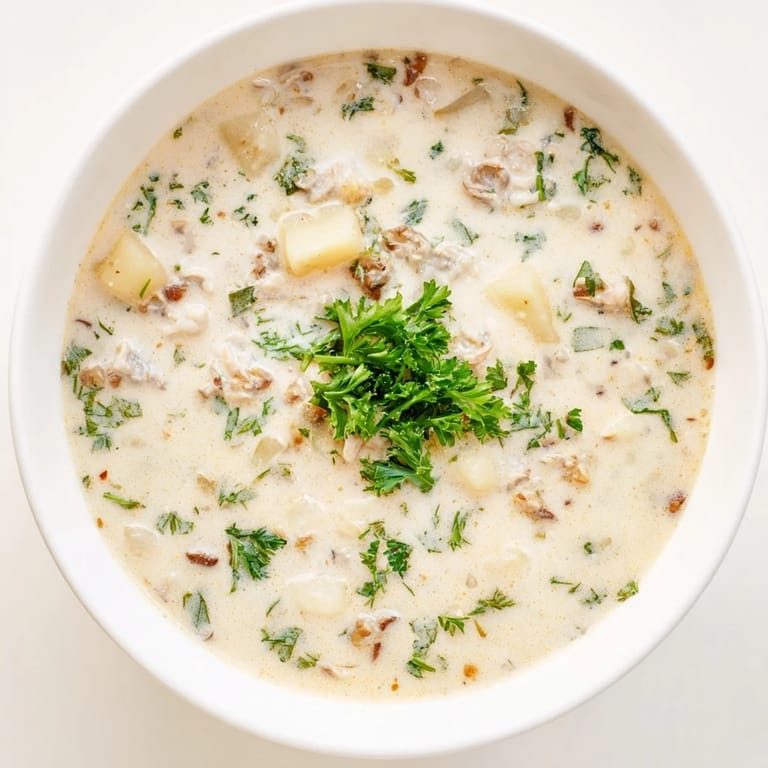
Save There's something sacred about a pot of chowder simmering on the stove while someone you love sits at your kitchen table. Make this when you want to give comfort, and let the steam and smell do the talking.
Recipe Questions & Answers
- → How do I prepare fresh clams for the chowder?
Steam fresh clams in water until they open, discard any unopened, then chop and reserve the cooking liquid for enhanced flavor.
- → Can I substitute canned clams?
Yes, canned chopped clams can be used, just drain and reserve the juice to retain the rich seafood taste.
- → What thickening method is used in this chowder?
A roux made of butter and flour adds body and smoothness to the broth without overpowering the delicate clam flavor.
- → How can I adjust the chowder’s texture?
Mash a few potatoes in the pot before adding clams and cream to create a thicker, heartier consistency if desired.
- → Are there suggested pairings for this dish?
This chowder pairs beautifully with a crisp Chardonnay or a light lager, enhancing its rich and savory profile.
- → Can I make a lighter version of this dish?
For a lighter version, substitute half-and-half for the heavy cream while keeping the creamy texture delightful.